

Cabinet Procurement Cost Guide
Last reviewed: August 2026
Are kitchen cabinets from China still cheaper for a US buyer in 2026? Sometimes—and the answer now depends less on the factory price than on which shipper’s name is on the customs entry. This guide gives you the working numbers: US custom-cabinet benchmarks, China FOB asking prices, the 2026 duty stack, container freight, and a landed-cost formula.
The short answer: as of August 2026, a China-origin wooden kitchen cabinet entering the US carries a duty stack of roughly 109% of entered value when the shipper holds a separate antidumping rate and the all-others countervailing rate—or roughly 595% under the China-wide AD rate and an adverse-facts CVD rate. Same factory quote; landed cost a factor of three apart.
Importing suits project buyers: developers, contractors and importers ordering multiple kitchens with controlled specifications, consolidated freight and a shipper whose AD/CVD rates are known. It rarely suits a single retail kitchen on a tight timeline.
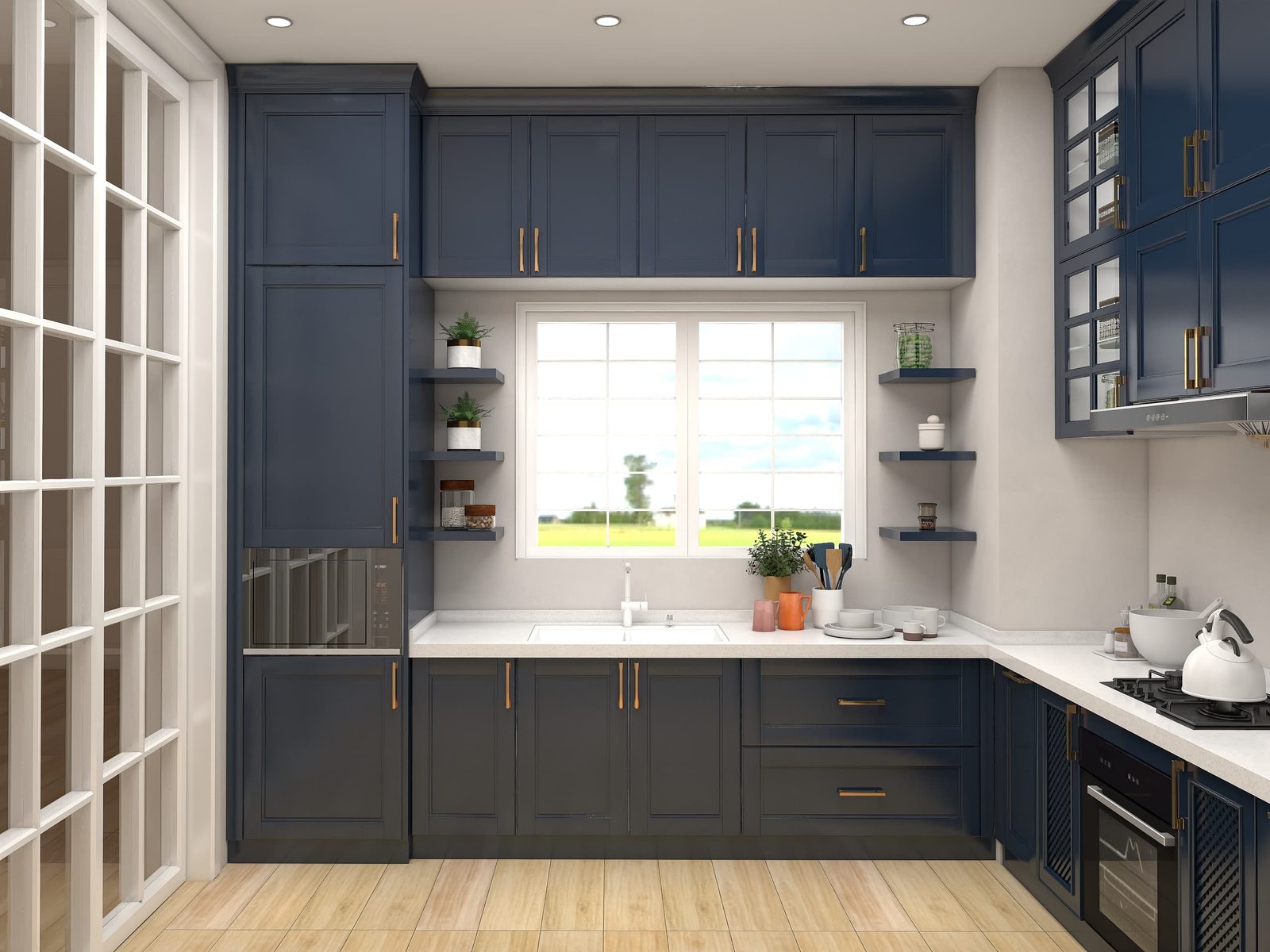
What Custom Cabinets Cost in the US
Before any import comparison, you need an honest domestic benchmark. The figures below are US national averages, accessed August 24, 2026.
| Benchmark | Figure | Scope / region / date | Source |
|---|---|---|---|
| Custom cabinetry, installed | $15,000–$25,000 for ~30 linear feet (average ~$18,600); ≈$550–$570 per linear foot all-in | US national, installed; accessed 2026-08-24 | Fixr, “Cost to Install Custom Cabinets” |
| Cost build-up per linear foot | Cabinet box ~$400; doors, finish and moldings +$150–$170; installation labor $100–$200 | US national; accessed 2026-08-24 | Fixr |
| Materials only, by species | MDF / maple / birch $300–$400 per lf; white oak $400–$600; cherry $500–$700 | US national, materials only; accessed 2026-08-24 | Fixr |
| Cost to build cabinets | $1,256–$1,534 per cabinet | US national, May 2026; basic scope, professional install; excludes GC markup of 13–22%, sales tax, permits, demolition | Homewyse |
| Installation labor | $486–$736 per cabinet | US national, May 2026 | Homewyse |
| Semi-custom materials | $585.87–$873.22 per unit | US national, May 2026 | Homewyse |
You will also meet the “10×10 kitchen” price in US retail. It is a trade convention, not a measurement of your home: a standard L-shaped 10 ft × 10 ft sample layout is roughly 20 linear feet and 10–12 cabinets, and the price covers cabinets only—no countertops, appliances or installation.
What China FOB Prices Look Like
The table below samples asking prices from made-in-china.com listings, accessed August 24, 2026. These are asking prices, not transaction prices, quoted FOB (free on board at the Chinese port), per meter or per square meter—no duty, freight or installation included.
| Listing sample | Asking price (FOB) | Unit / scope | Source (accessed 2026-08-24) |
|---|---|---|---|
| Complete custom kitchen cabinet | US$240–$280 per meter | Per meter, FOB; catalog range | Made-in-China Kitchen Cabinets catalog |
| Other custom cabinet listings | US$80–$180 per square meter | Per sqm, FOB | Same catalog page |
| Foshan factory plywood / wood-veneer custom cabinets with island | US$114–$142 per meter | Per meter, FOB Foshan | Made-in-China listing |
| Foshan custom cabinet listing | US$100–$120 per meter | Per meter, FOB Foshan | Made-in-China listing |
| Modern-style plywood kitchen cabinet | US$110–$168 per meter; wooden cabinets US$98–$188 per sqm | Per meter / per sqm, FOB | Made-in-China browse page |
Do not compare these numbers directly with the US table above. A per-meter FOB ex-works figure and a US per-linear-foot installed figure differ in unit, scope and location: FOB excludes freight, insurance, duties, broker fees, delivery and installation, and a listing’s “meter” does not guarantee the same depth, hardware or finish system as a US linear foot. The correct comparison is landed cost against a US quote on the same specification.
The 2026 Duty Stack: The Decisive Variable
For China-origin wooden kitchen cabinets (within the scope of HTS 9403.40.9060), the August 2026 duty position is a stack of layers, each a percentage of entered value. The antidumping and countervailing layers are shipper-specific—two buyers can import identical cabinets at landed costs a factor of three apart.
Shipper with separate AD rate + all-others CVD rate
- Section 301 (List 3): 25%
- Section 232 wood products: 25%
- Antidumping: 37.96%
- Countervailing: 20.93%
China-wide AD rate + AFA CVD rate
- Section 301 (List 3): 25%
- Section 232 wood products: 25%
- Antidumping: 251.64%
- Countervailing: 293.45%
Cash-deposit rates, % of entered value; MFN base duty is 0%. AD/CVD rates are shipper-specific and change in annual reviews. Source: 85 FR 22126 & 85 FR 22134 (2020 AD/CVD orders); USTR Section 301 List 3; Proclamations 10976/11000. Accessed Aug 2026.
| Duty layer | Rate (ad valorem) | Status, August 2026 | Source / date |
|---|---|---|---|
| MFN Column 1 base duty | 0% (Free) | In force | USITC HTS |
| Section 301, List 3 | 25% | In force (10% from 2018-09-24, raised to 25% 2019-05-10) | USTR Section 301 List 3 |
| Section 232, wood products | 25% on kitchen cabinets, vanities and parts | In force since 2025-10-14 (Proc. 10976); 50% step postponed to 2027-01-01 (Proc. 11000) | KPMG TaxNewsFlash 2026-01-02; CBP CSMS #66492057 |
| Antidumping, A-570-106 (cash deposit) | Separate-rate companies ≈37.96%; China-wide 251.64% | In force since 2020-04-21; continued after the 2025 sunset review | 85 FR 22126; FR Doc. 2025-17986 (2025-09-17) |
| Countervailing, C-570-107 (cash deposit) | All-others 20.93%; adverse-facts companies 293.45% | In force since 2020-04-21; continued after the 2025 sunset review | 85 FR 22134; FR Doc. 2025-17986 |
| Total, best case | ≈109% (25 + 25 + 37.96 + 20.93) | Requires the shipper’s separate AD rate and all-others CVD rate | Sum of layers above |
| Total, worst case | ≈595% (25 + 25 + 251.64 + 293.45) | China-wide AD rate plus adverse-facts CVD rate | Sum of layers above |
Three pieces of 2026 context sit around this stack. First, the IEEPA tariffs are gone: the Supreme Court struck them down in Learning Resources, Inc. v. Trump on 2026-02-20, and CBP stopped collecting them on 2026-02-24. Second, the Section 122 10% surcharge that applied from 2026-02-24 expired on 2026-07-24. Third, the AD/CVD orders survived the 2025 sunset review, and their deposit rates move with annual administrative reviews.
One item needs professional confirmation, not a blog answer. Trade advisories report that the new Section 301 forced-labor duties (12.5% for China, effective 2026-07-24) exempt goods already subject to Section 232 tariffs—confirm with a licensed customs broker whether that exemption reaches your HTS line.
Freight and the Landed-Cost Formula
Freight is the second moving part. The Drewry World Container Index for the week of 2026-08-20 put the composite at $4,526 per 40 ft container, up 4% week on week. Route spot rates that week, as republished by MacroMicro from the Drewry WCI series, ran to roughly $6,802 per 40 ft Shanghai–Los Angeles and $9,507 Shanghai–New York (Drewry’s own page lagged at 2026-07-30 values of $5,739 and $7,578). Rates spiked in August 2026—treat any freight number older than a few weeks as stale, and note the index excludes inland haulage, terminal handling, chassis and demurrage. For the practical packing, loading, and shipping choices behind those freight numbers, see our guide to how packing and shipping works.
For scale, industry estimates from a Vietnam factory guide (Starvia, June 2026—estimates, not statistics) put a 40 ft container at roughly 800–1,000 flat-packed RTA cabinet units, with the FOB value of a 40 ft of US-spec all-plywood RTA shaker cabinets from China around $32,000–$40,000. At August 2026 rates, freight is a material line item, not a rounding error. For buyers comparing that container economics with a factory-direct volume program, see our guide to wholesale kitchen cabinets from China.
Landed cost is a checklist, not a multiplier. Keep any item you cannot price as an explicit unknown—an unknown in the formula is honest; an unknown set to zero is a wrong answer.
| Landed-cost line | Covers | What to ask your supplier or broker |
|---|---|---|
| Cabinet price | Ex-works or FOB price against the approved specification | Which incoterm, which port, what is included per room? |
| Design and engineering | Shop drawings, engineering to site dimensions | Is drawing work included, and how many revision rounds? |
| Hardware and accessories | Hinges, slides, pull-outs, lighting | Which hardware series and brand is quoted? |
| Packaging | Export cartons, protection, room-by-room labels | What is the packing standard? |
| Freight and insurance | Ocean freight, THC, chassis, inland legs, insurance | Current rate for the shipping window; what does it exclude? |
| Duty and tax | The full duty stack above, broker fees, state tax | What is the shipper’s AD/CVD case rate, confirmed at access.trade.gov? |
| Local delivery | Port-to-site transport, offload, storage | Who books drayage, and what if the site is delayed? |
| Installation | Labor to set, level, scribe and finish | Is installation in scope, and at what rate? |
| Rework allowance | Damaged, missing or mis-sized items; replacement freight | What is the claim process, and who funds replacement shipping? |
How to Compare a China Quote Against a US Quote on the Same Specification
Most China-versus-US comparisons fail before the arithmetic starts, because the two quotes describe different kitchens. The method that works is mechanical:
- Same spec sheet. One written specification—carcase material and thickness, door construction, finish system, dimensions by room—attached to both quotation requests.
- Same hardware series. “Soft-close hinges” is not a specification; a named series from a named brand is. Substitute hardware is the most common silent gap between quotes.
- Same finish system. Lacquer, veneer, melamine and thermofoil price and wear differently; match the finish schedule, including sheen and edge treatment.
- Same inclusion list. Countertops, appliances, sinks, delivery and installation belong in both quotes or neither. US installed benchmarks include labor; FOB prices never do.
For how door construction affects the specification and price, compare shaker and flat-panel kitchen cabinets. Our guide to choosing a custom cabinet manufacturer covers the supplier-side half of this method. For the supplier landscape, see our roundup of kitchen cabinet manufacturers in China.
How George Group Builds a Cabinet Quotation
George Group quotes cabinets from documents, not from per-meter averages. A review can start from floor plans, a room schedule or a preliminary bill of quantities; the quotation that comes back is itemized for row-by-row comparison against a US bid on the same specification.
| What the buyer sends | What George Group reviews | What the quotation shows |
|---|---|---|
| Floor plans and kitchen elevations | Missing dimensions, appliance positions, wall conditions | Cabinet list by room, with dimensions and quantities |
| Room schedule or preliminary BOQ | Cabinet count, tall units, islands, accessories | Unit, calculation basis and quantity per line |
| Style references and target specification | Door style, carcase material, finish system | Material, finish and construction per item |
| Hardware preferences | Hinge, slide and accessory series | Named hardware series per cabinet |
| Destination port and site conditions | Freight window, consolidation options | Packing method, commercial terms, options and exclusions |
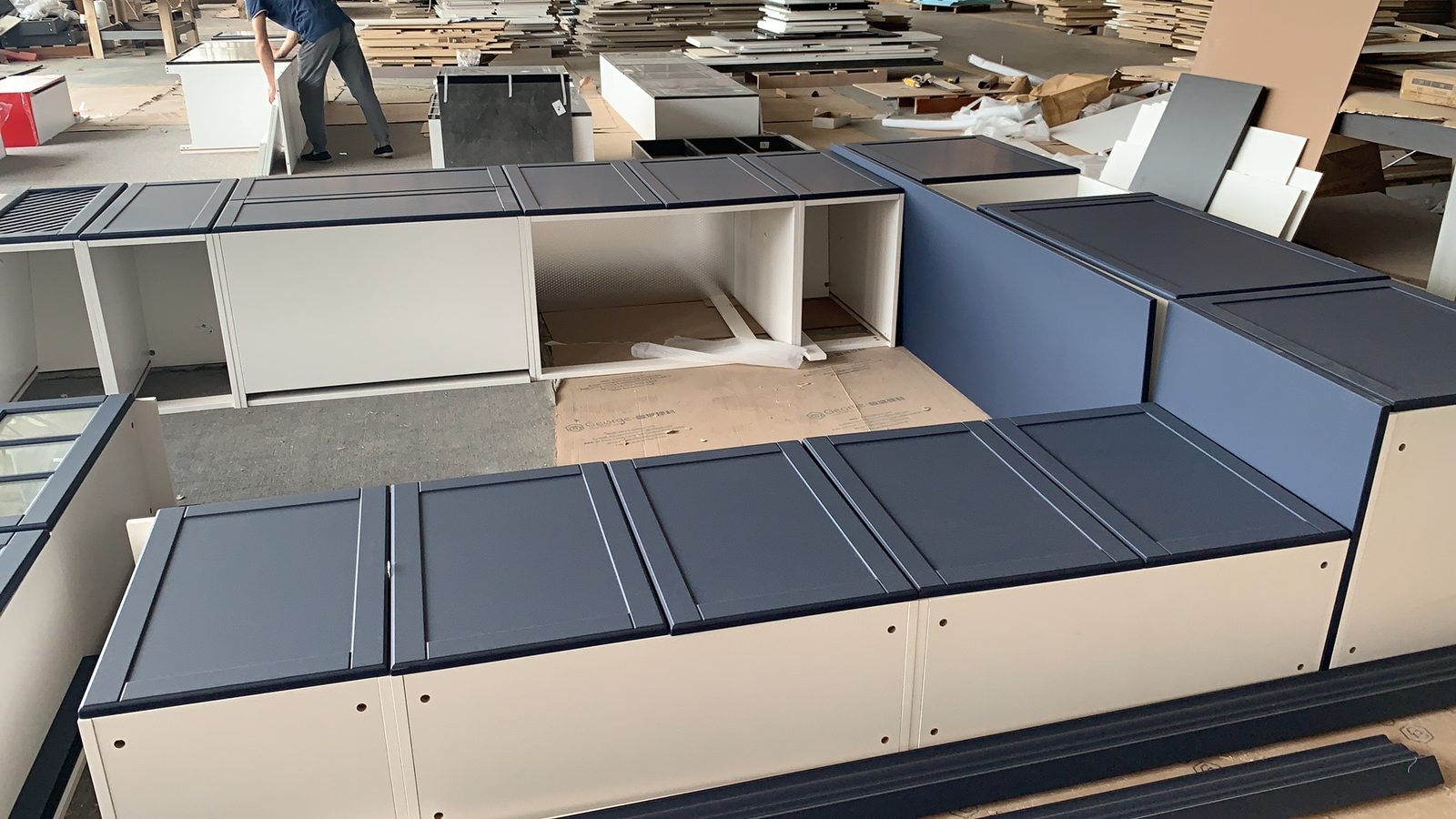
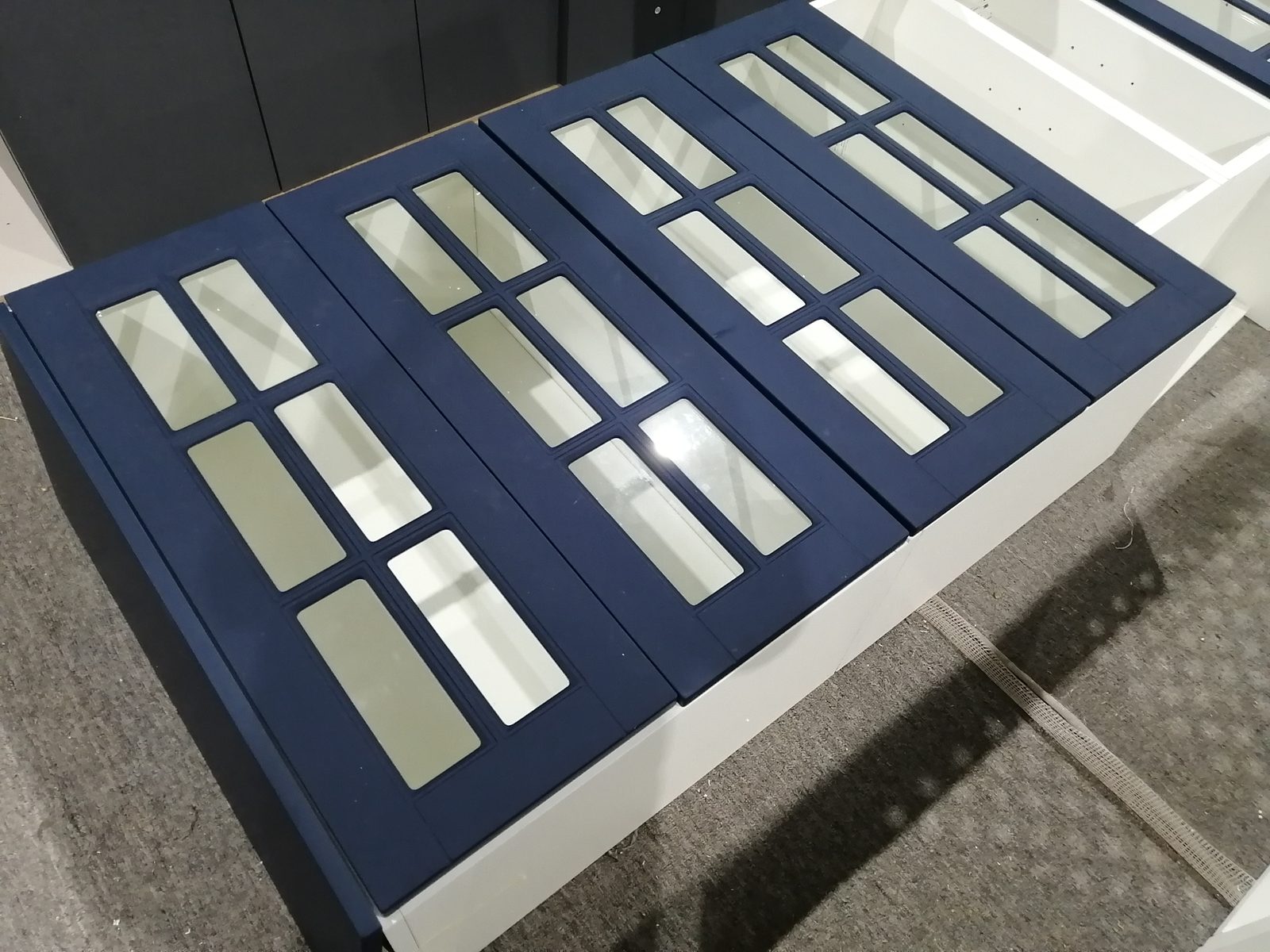
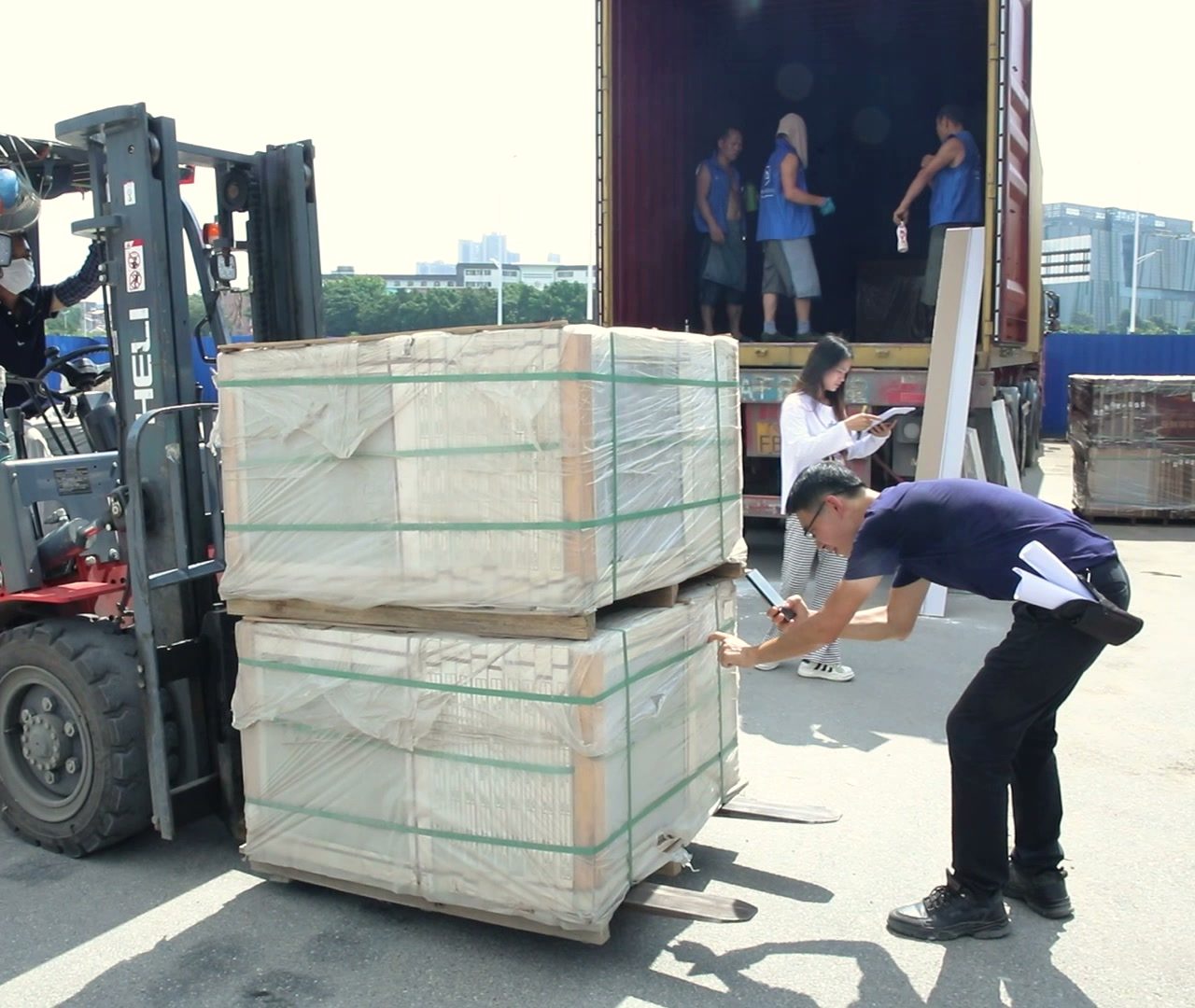
Production is structured around approval gates: shop drawings with revision numbers; a material and finish schedule approved against physical samples; a hardware schedule; first-article comparison for repeatable items; dimension and finish checkpoints; pre-shipment verification; room-by-room carton labels; a consolidated packing list; and a container loading record. Each gate produces a document the buyer receives or signs.
On compliance, George Group holds CARB2/TSCA, FSC and GREENGUARD Gold certificates. US-bound composite wood products fall under EPA TSCA Title VI formaldehyde emission standards—confirm the requirements before the specification is approved, not after the container arrives. Facility figures are company-provided: a 30,000 m² multi-category showroom and 100,000 m² of manufacturing facilities in Foshan.


Risks and Exclusions
Five qualifications belong next to every number in this article:
- AD/CVD cash deposits are estimates. Final liability is set when entries liquidate and can rise after administrative reviews—a deposit, not a settled bill.
- Rates change. This stack is accurate for August 2026 and will age; confirm current rates before contracting.
- Freight is volatile. The August 2026 spike moved Shanghai–US spot rates by double digits in weeks.
- Single small kitchens rarely justify importing. Broker minimums, freight and rework allowance spread across ten cabinets instead of a hundred.
- Scope mismatches distort comparisons. Countertops, appliances, delivery and installation are the usual omissions—if one quote includes them and the other does not, the cheaper quote is a different product.
Methodology and Sources
- US benchmarks: Fixr, “Cost to Install Custom Cabinets” and Homewyse (cost to build cabinets, cost to install kitchen cabinets, May 2026). All accessed 2026-08-24; each figure keeps its source’s scope and exclusions.
- China FOB figures are asking-price samples from made-in-china.com listings, accessed 2026-08-24—market samples, not transaction data or George Group pricing.
- Duty rates: 2020 AD/CVD orders (85 FR 22126, 85 FR 22134), continued after the 2025 sunset review (FR Doc. 2025-17986); USTR Section 301 List 3; Proclamations 10976 and 11000 (KPMG TaxNewsFlash 2026-01-02; CBP CSMS #66492057). IEEPA termination: SCOTUSblog; White & Case alert, 2026-03-02. Section 122 window per z2data.com, 2026-07-28. Verify shipper-specific rates at access.trade.gov.
- Freight: Drewry World Container Index, week of 2026-08-20; route spot rates as republished by MacroMicro from the Drewry WCI series.
- Container-capacity and FOB-value figures are industry estimates from Starvia, a Vietnam factory guide (MOQ guide and Vietnam vs China comparison, June 2026)—estimates, not statistics.
- George Group facility figures (30,000 m² showroom; 100,000 m² manufacturing facilities) and certificate holdings are company-provided.
- This article is a cost-research guide, not a price commitment, legal advice or a customs ruling. Duty treatment of a specific entry should be confirmed with a licensed customs broker.
Frequently Asked Questions
Is importing cabinets from China still worth it in 2026?
It depends on your shipper’s AD/CVD rate and your order scale. At roughly 109% total duty, a project-scale order with controlled specifications and consolidated freight can still compete with a US quote on the same specification; at roughly 595%, it cannot. Run the landed-cost formula with your actual rate before deciding.
Are cabinet samples free?
Most small samples are usually free; you only need to pay for shipping. Larger sample items or full sample doors may carry a charge—confirm before ordering.
Is there a minimum order quantity for cabinets?
We do not state a fixed MOQ, because it depends on the cabinet series and production run. What makes smaller orders workable is consolidation: cabinets can share a container with other building materials or furniture for the same project, spreading freight and fixed costs. Our whole-house customization guide explains how consolidated projects are organized.
How do I find my shipper’s duty rate?
Ask the supplier or their exporter for their AD/CVD case rate under orders A-570-106 and C-570-107, then confirm it through a licensed customs broker or at access.trade.gov. Never price a project on an assumed rate.
How long does a cabinet order from China take?
It depends on drawing approvals, order scale, production scheduling and the shipping window, so we do not publish a fixed lead time. Fast approvals on shop drawings and samples, and a shipping window booked before production finishes, compress schedules more reliably than any promise.
Planning a Cabinet Order for a US Project?
Send George Group your floor plans, room schedule or preliminary BOQ, target specification and destination port. The team will return an itemized cabinet quotation you can compare line by line against your US bid—same specification, exclusions stated. Explore the kitchen cabinets range for door styles, construction options and finish systems.
Continue your cabinet sourcing research:
- How to choose a custom cabinet manufacturer
- Top kitchen cabinet manufacturers in China
- Shaker vs flat-panel kitchen cabinets
- custom kitchen cabinets from China: any style, any size, factory-direct pricing
- Kitchen Cabinet Quality Control from China: Get What You Ordered, Every Shipment
If you are coordinating supplier meetings around the fair, our guide to planning a Canton Fair sourcing trip maps Phase 2 and the Foshan factory visit into one itinerary.