

China Sourcing Trip Planner
Last reviewed: September 2026
If you source building materials or whole-house furnishings, the 140th Canton Fair comes down to five days: Phase 2, October 23–27, 2026, at the Canton Fair Complex in Pazhou, Guangzhou. That is where the building and decorative materials, sanitary ware, and furniture halls are — and for buyers who plan it right, it is only the first half of the trip. This guide tells you what the fair can and cannot do for you, how to screen suppliers at the booth in ten minutes, and how to bolt a two-day Foshan factory tour onto the same flight so you come home with a verified supplier, not a stack of business cards.
Quick answer — how to plan the trip:
- Go to Phase 2 (Oct 23–27). Building and decorative materials, sanitary and bathroom equipment, and furniture all exhibit in Phase 2. Lighting sits in Phase 1 (Oct 15–19); consumer goods close the fair in Phase 3 (Oct 31–Nov 4).
- Use the fair for what it is good at. Comparing samples, configurations, and price levels across dozens of suppliers in one hall. It cannot show you a factory’s real capacity or quality control — that only happens on the factory floor.
- Book the second half before you fly. Foshan — the heart of China’s building materials belt — is about an hour from the fairgrounds. Two days of factory and showroom visits after the fair turns booth conversations into a signed order. Slots during fair season go fast, so lock yours in advance.
Already planning the trip? Send us your product list before you fly — we will have quotations and a factory visit slot ready when you land.
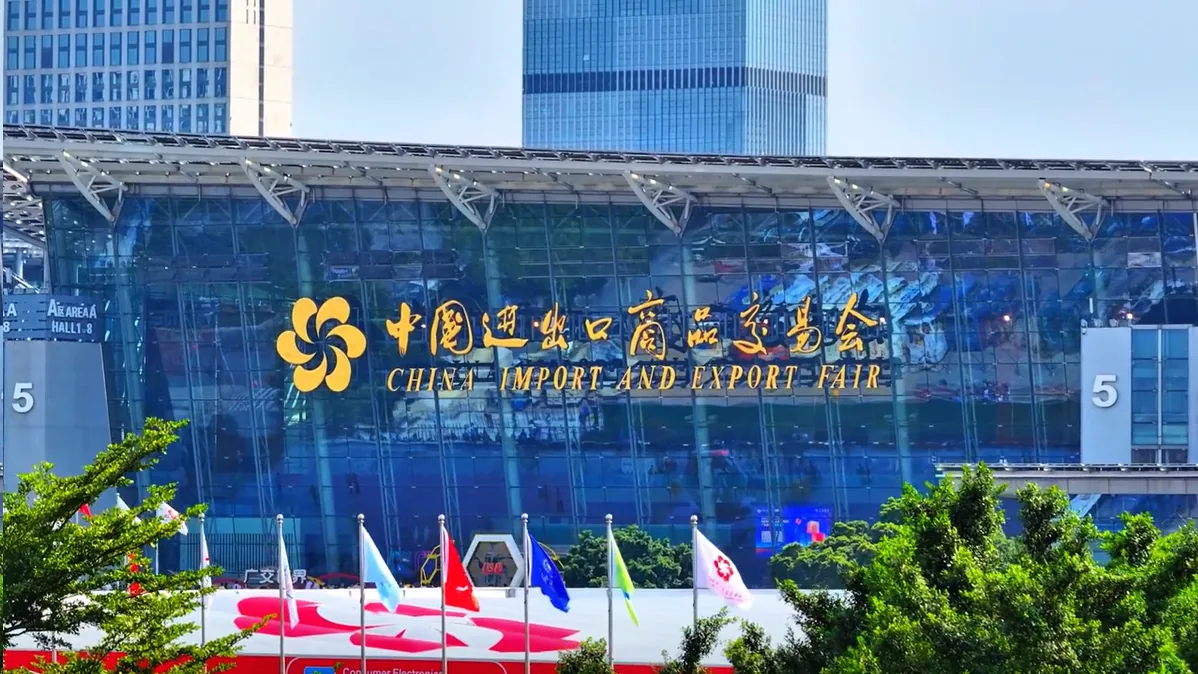
Which Phase Has What You Came For
The Canton Fair is not one event — it is three consecutive five-day phases, each with its own product groups. Buyers who show up in the wrong phase find hall after hall of irrelevant categories. Here is the 140th session mapped to what a building materials buyer actually needs:
| Phase | Dates (Autumn 2026) | Product groups | Your mission |
|---|---|---|---|
| Phase 1 | October 15–19 | Electronics and appliances, machinery, vehicles, hardware, lighting equipment | Only if you also source lighting fixtures or hardware |
| Phase 2 | October 23–27 | Building and decorative materials, sanitary and bathroom equipment, furniture, housewares, gifts and decorations | Your main event — cabinets-adjacent materials, windows and doors materials, tiles, sanitary ware, furniture |
| Phase 3 | October 31–November 4 | Textiles and garments, office supplies, food, personal care | Skip unless you buy consumer goods |
Phase 2 Is Your Main Event
Five days is more than it sounds, and less than you need if you wander. A structure that works for most building materials buyers: days one and two in the building materials and sanitary halls, day three in furniture, and days four and five reserved for second visits — going back to the two or three suppliers who survived your first pass, collecting firm quotations, and confirming factory visit appointments. The buyers who regret their trip are the ones who spent all five days collecting catalogs and none of them following up.
What the Fair Is Good For — and What It Can’t Do
The fair is the most efficient comparison-shopping environment in the industry: physical samples you can touch, configuration options laid out side by side, and a price level from every booth you stop at. What it cannot show you is the thing that decides whether your container arrives right: production capacity, quality control discipline, and whether the “factory” you are talking to is a factory at all. Booths are rented. Showrooms at the fair are staged. The second half of your trip exists to close that gap.
One administrative note before the strategy sections: overseas buyers register for a free Buyer Badge through the fair’s official Buyer Service System at cantonfair.org.cn, which also issues the invitation letter used for visa applications. Do this weeks ahead — badge queues on opening morning are the worst way to spend day one.
Walk the Fair With a Buyer’s Checklist
The difference between a productive fair and an expensive sightseeing trip is preparation. Three disciplines cover most of it.
Know Your Benchmarks Before You Land
Every booth quote you collect is meaningless until you can place it against a reference. Before you fly, build a simple benchmark sheet for each product line you are sourcing: what the factory price should look like, what it costs landed in the US after freight and the 2026 duty stack, and what the domestic alternative costs installed. If cabinets are on your list, our landed-cost math for cabinets walks through the full calculation line by line; for fenestration, the same logic is in our guide to what windows and doors cost landed. The point at the fair is not to negotiate to a number — it is to instantly recognize whether a booth quote is in a credible range at all.
The 10-Minute Booth Test
You will pass hundreds of booths. Five questions separate real factories from traders and storefronts — and each takes about two minutes:
- “What share of your production is exported, and to which markets?” Strong answer: named destination markets with repeat customers. Red flag: vague “we export everywhere” with no specifics.
- “Which certifications do you hold for my market?” Strong answer: specific standard names and test scopes, offered without prompting. Red flag: a generic “we have all certificates” or certificates for unrelated products.
- “Is this your own factory?” Strong answer: factory address, production lines described in detail, an immediate invitation to visit. Red flag: hesitation, or “we work with many partner factories.”
- “Can I visit the factory this week?” Strong answer: yes, with a contact person and a proposed date. Red flag: any version of “not this week.”
- “Can you quote against my drawings and spec sheet?” Strong answer: yes, with questions about tolerances and materials. Red flag: they only sell what is on the shelf at the booth.
Two red flags and you move on — the hall is too big for maybes. The survivors earn a day-four second visit.
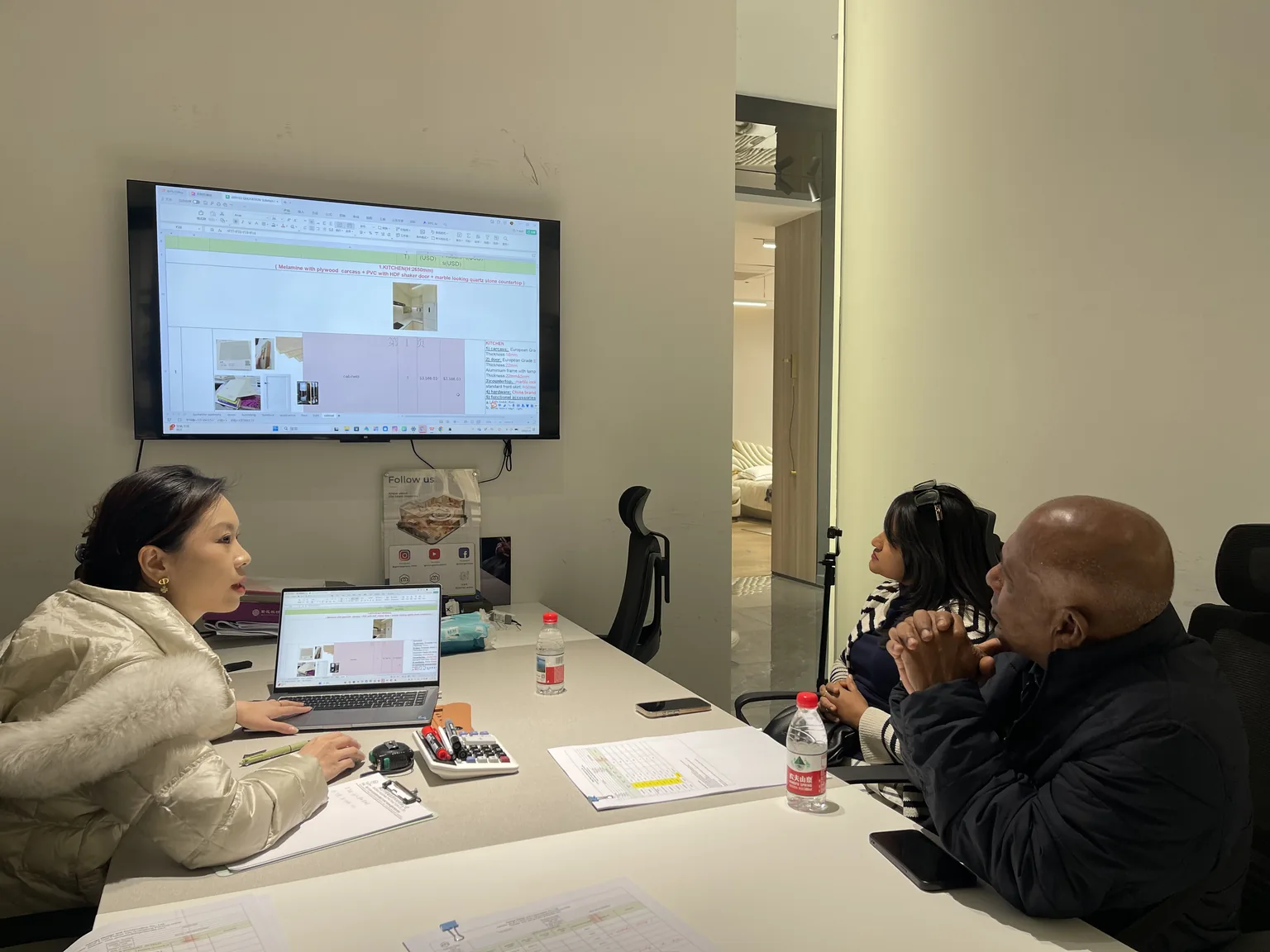
Collect Quotes You Can Actually Compare
Booth quotes are only comparable if they are built on the same specification. Bring one spec sheet per product line — sizes, materials, hardware tiers, finishes, certification targets — and hand the identical sheet to every supplier. Pin the Incoterm (a FOB quote and an EXW quote are not the same offer), ask whether the headline price is per unit or per square meter, and ask what the sample policy is. A supplier who quotes carefully against your sheet is telling you something about how they will handle your order.
A faster option: send us your product list and spec sheets before the fair, and we will return a line-itemed quotation on the same format. Then you walk the halls with a real factory benchmark already in your pocket, and every booth quote gets judged against it.
The Fair Shows You Samples. A Factory Shows You the Truth.
Why the Factory Visit Is Non-Negotiable
Everything at a trade fair is curated: the best samples, the best finishes, the best salespeople. Production is none of those things. The questions that decide your container’s fate — how incoming materials are verified, how edge banding and glazing quality are checked line by line, whether finished units are trial-assembled before packing — can only be answered on a factory floor. If you want to know what you should expect to see when you get there, our guide to what a real QC process looks like lays out the checkpoints a serious factory runs and the evidence each one produces. Use it as your walk-through checklist.
The Foshan Advantage
Here is the geography that makes this trip work: Foshan, the densest building materials manufacturing cluster in China — cabinets, windows and doors, tiles, sanitary ware, furniture — sits about an hour from the Pazhou fairgrounds. The suppliers exhibiting in Phase 2 are disproportionately from this region, and fair season is when their factories are in full reception mode, with English-speaking staff and sample rooms prepared. It is also when visit calendars fill up, which is why the appointment should be booked before you board your flight, not from your hotel lobby.
For whole-house buyers, the math gets even better: a Foshan-based manufacturer covering multiple categories lets you inspect cabinets, windows, tiles, and sanitary ware in one visit and ship them as one container, every category — which is exactly how you spread the fixed costs of freight and customs across the whole order.
A 2-Day Foshan Factory Tour Template
Two days is enough if the agenda is set in advance. A template we run with visiting buyers:
| Time | Program | What you are verifying |
|---|---|---|
| Day 1 morning | Showroom walk-through: full product ranges, materials, hardware tiers, finish samples | What the factory can actually build — not the five samples they flew to the fair |
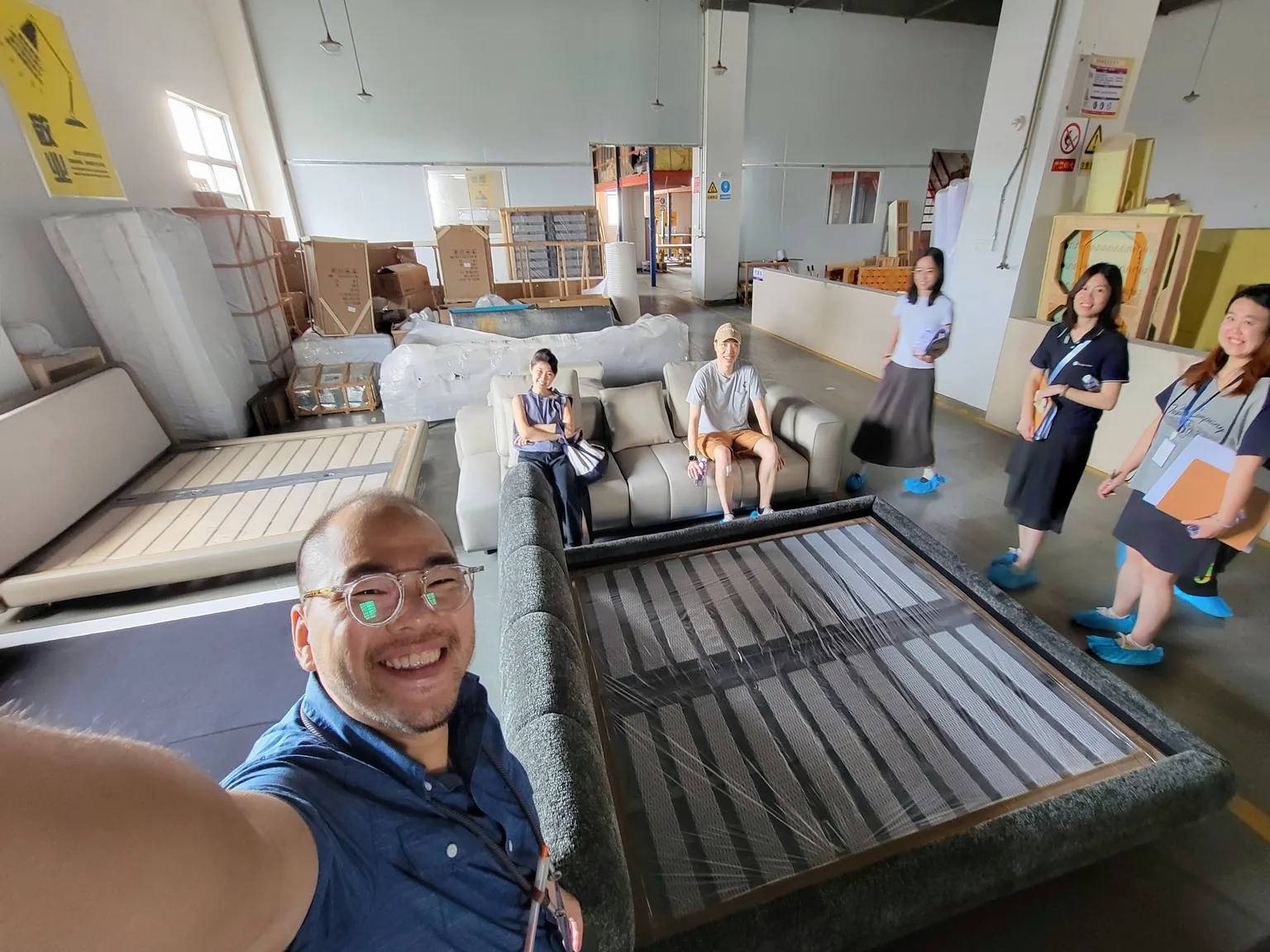
| Day 1 afternoon | Factory floor: production lines, edge banding and finishing stations, trial assembly area, QC checkpoints | Capacity, process discipline, and whether quality control exists as a system |
| Day 2 morning | Engineering session: your drawings and spec sheet reviewed line by line; configuration and quotation finalized | Whether they can build your order, at a price you can compare |
| Day 2 afternoon | Logistics and terms: packing standards, container loading plan, lead time, payment and inspection terms | Whether the deal survives contact with a calendar and a contract |
Can’t Wait Until October? Preview the Showroom Online
You do not have to fly blind. George Group’s digital showroom lets you walk our product ranges online before you board — sanitary ware and ceramic tiles, flooring, marble and granite, furniture, lighting, furnishings and wall panels, doors and windows — across nine floors of 3D tours, starting from the materials museum in our lobby. Pick a floor below and take the tour right here on this page. Buyers who preview online arrive with a shortlist, and their two days in Foshan go into decisions instead of orientation.
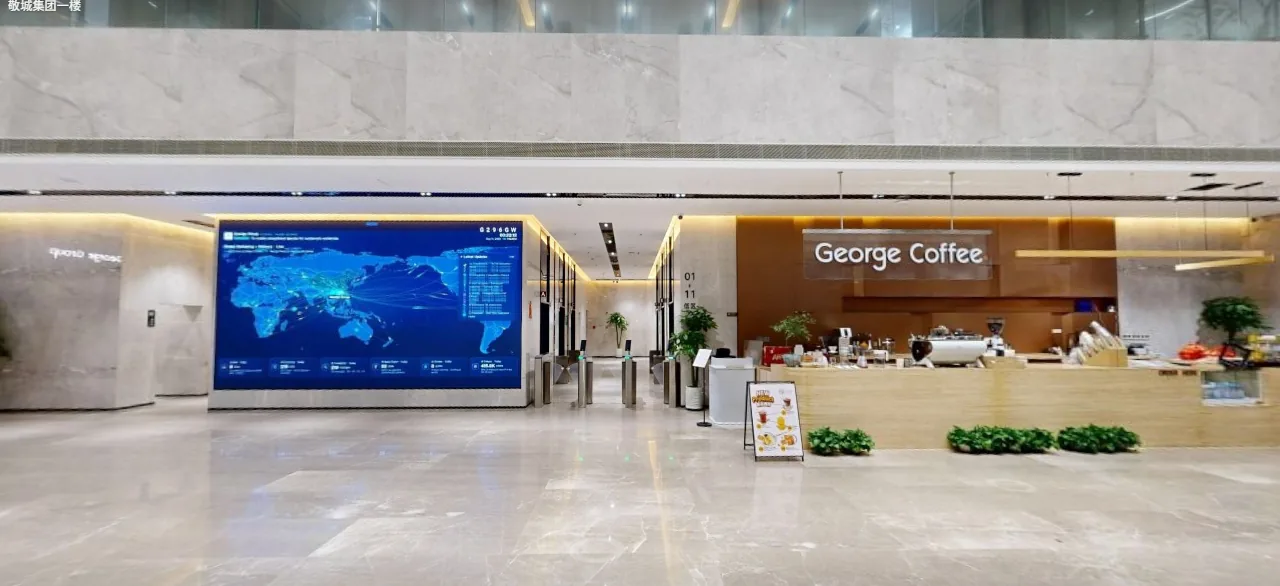 3D Tour1F
Lobby, Materials Museum & Design Center
Enter Tour →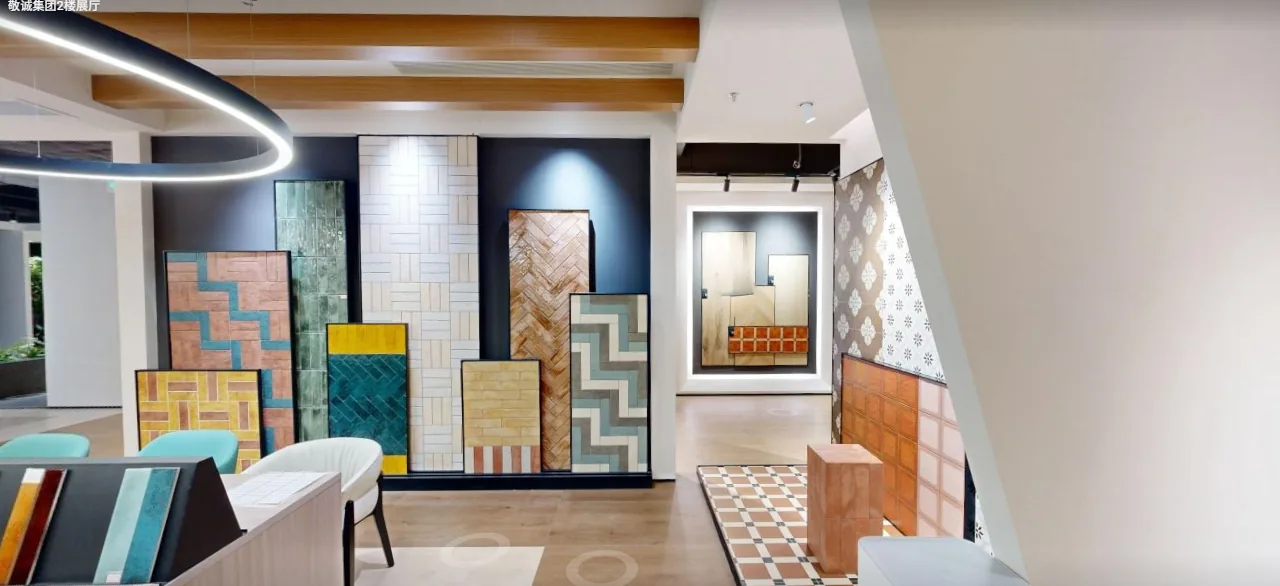 3D Tour2F
Sanitary Ware & Ceramic Tiles
Enter Tour →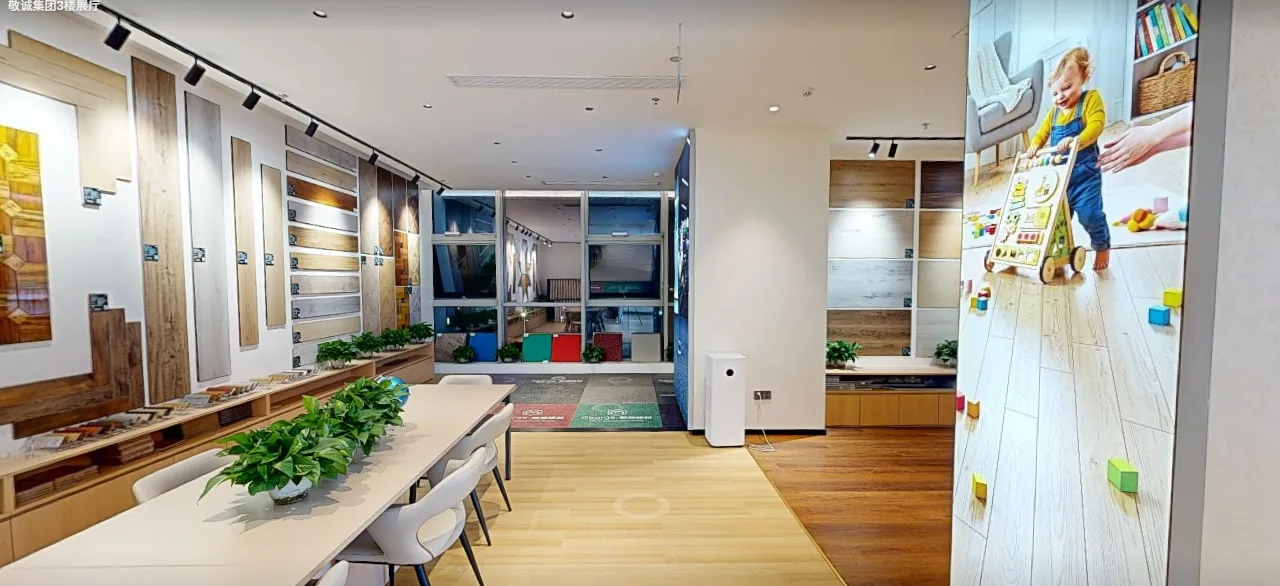 3D Tour3F
Flooring, Staircase, Metal & Glass
Enter Tour →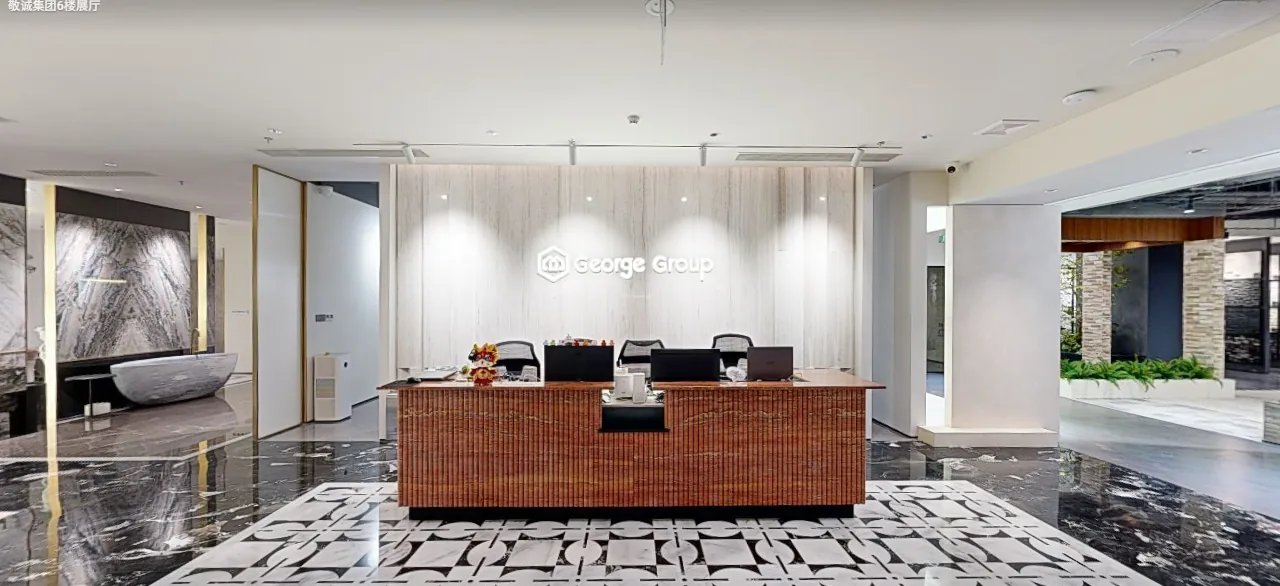 3D Tour6F
Marble & Granite
Enter Tour →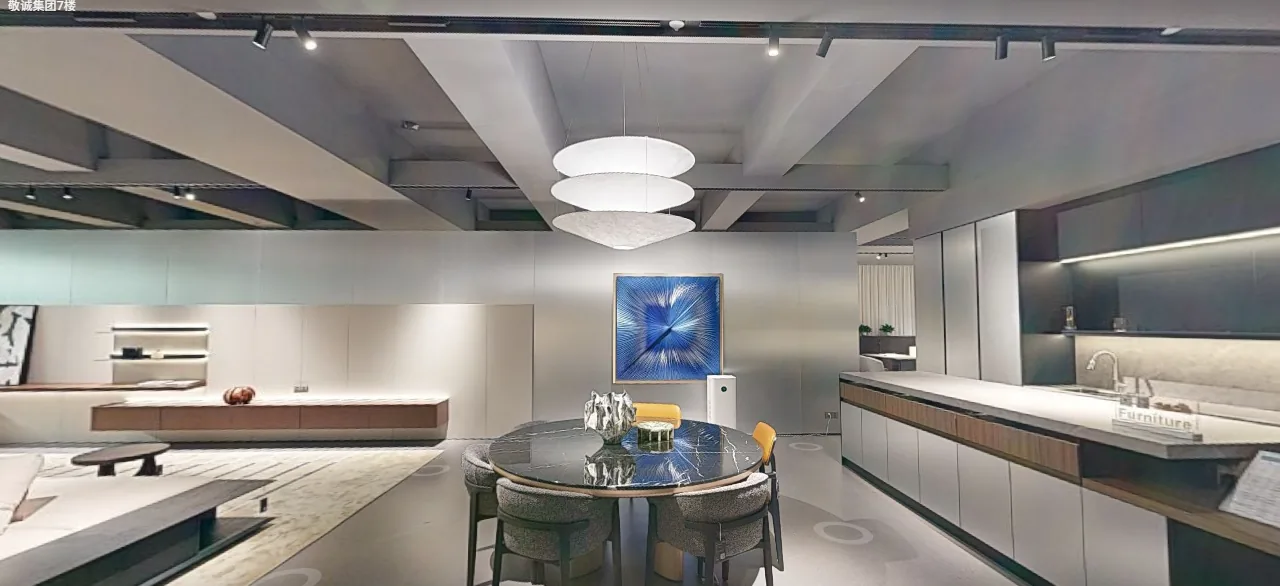 3D Tour7F
Furniture
Enter Tour →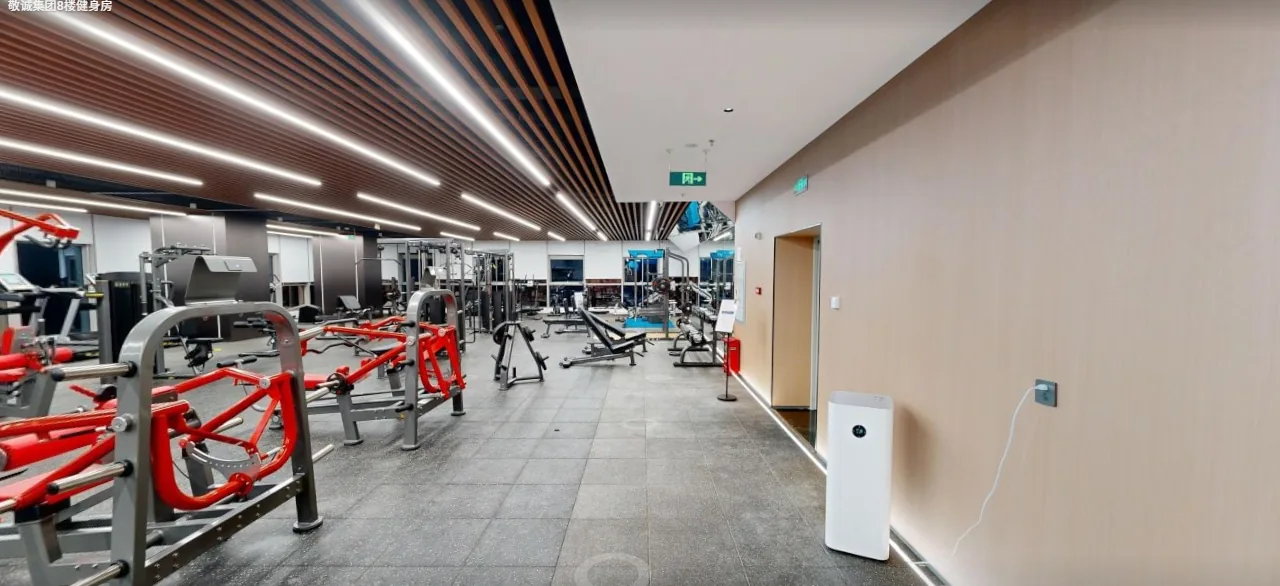 3D Tour8F
Hotel Supplies, Appliances & Gym
Enter Tour →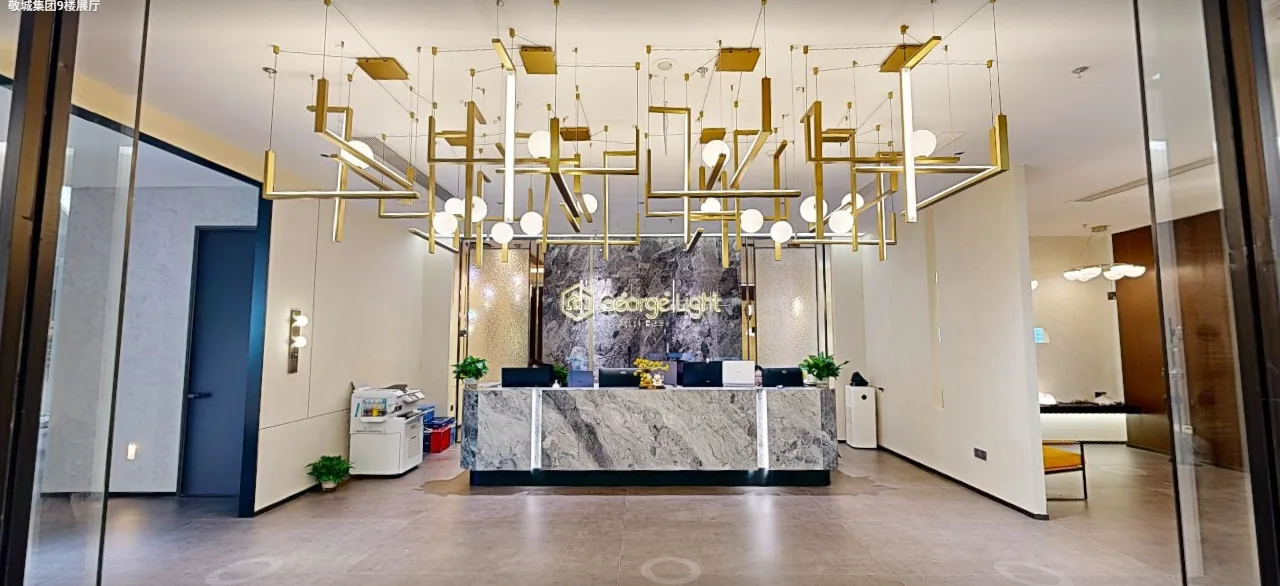 3D Tour9F
Lighting
Enter Tour →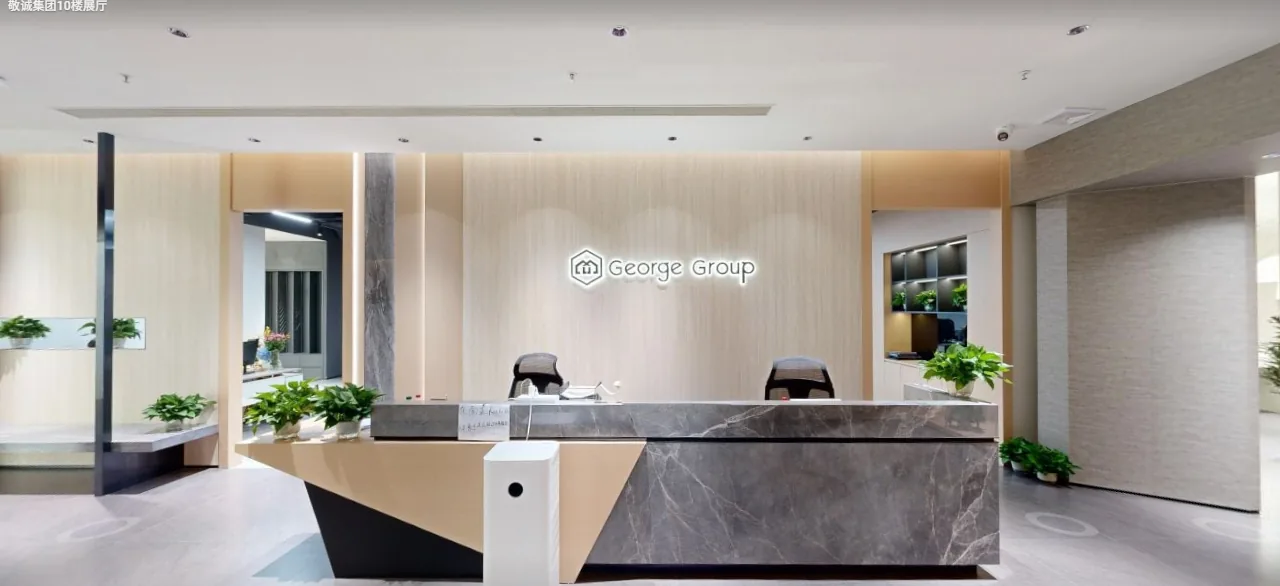 3D Tour10F
Furnishings & Wall Panels
Enter Tour →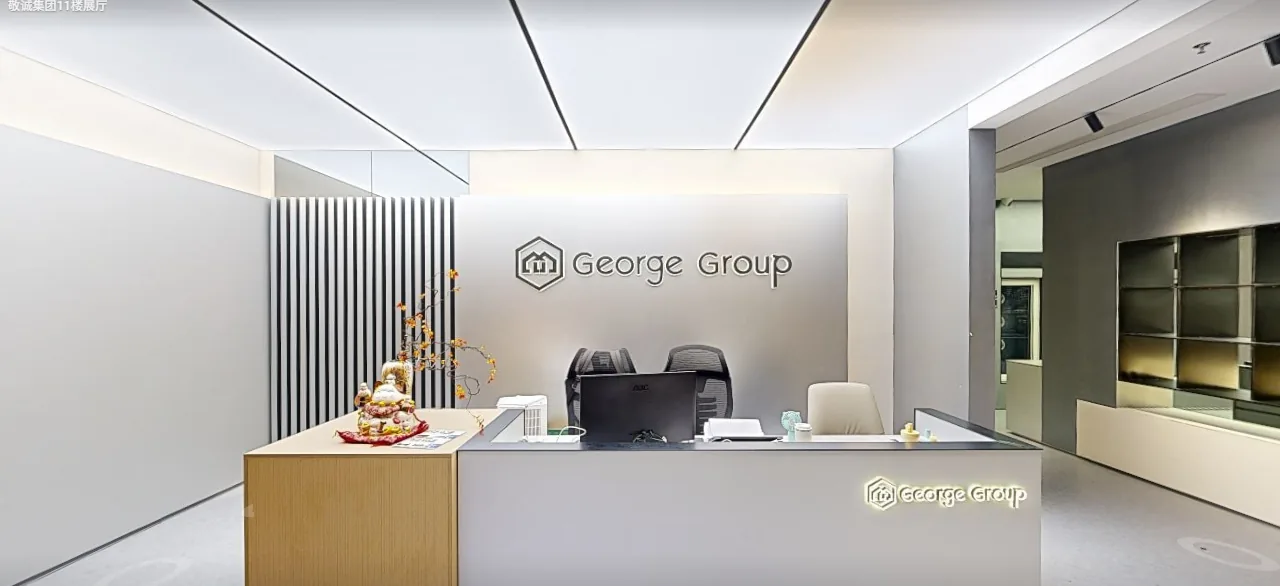 3D Tour11F
Doors & Windows
Enter Tour →Landing in Guangzhou or Foshan during the fair? Tell us your dates and we will handle the rest — showroom and factory reservations, an English-speaking host, and pickup coordination around your Phase 2 schedule. During fair season our team is fully dedicated to visiting buyers.
Three Sourcing Channels, One Trip
Buyers sometimes treat the fair, the wholesale markets, and factory-direct sourcing as three competing options. They are not competitors — they are stages of one funnel, and the same trip can run all three:
| Channel | What it can verify | Price level | Order flexibility | Best for |
|---|---|---|---|---|
| Canton Fair booth | Samples, configuration range, communication quality, first price indication | Indicative; rarely the final number | Low — booth staff follow fair-period scripts | Building a supplier shortlist fast |
| Foshan wholesale markets | Category breadth, current styles, spot pricing | Retail-to-wholesale; trader margins included | Medium — mixed-container orders possible | Filling category gaps and spotting trends |
| Factory-direct visit | Capacity, QC system, real production, engineering capability | Ex-works level; the number other prices should be judged against | High — custom specs, project volumes, consolidated shipments | Placing the actual order |
For buyers whose trip is anchored on cabinetry, a factory visit is also where you find out what a supplier’s range really looks like beyond the booth’s five display doors — our custom kitchen cabinets catalog shows the series and configurations that a walk through our showroom covers in person.
Plan This Trip With George Group
George Group is a building materials manufacturer based in Foshan, about an hour from the Canton Fair Complex. What makes a visit efficient is range: our product lines cover nine whole-house categories — kitchen cabinets, windows and doors, wardrobes, ceramic tiles, sanitary ware, lighting, furniture, and stone — so a single trip replaces what would otherwise be a multi-city sourcing loop across the Pearl River Delta.
There is plenty to walk through when you get here:
- The showroom: full-size displays across all nine categories — cabinet series, window and door systems, bathroom fixtures, tile and stone selections — so you can compare styles, materials, and hardware tiers physically, side by side, instead of from catalogs.
- The factory: production lines, finishing stations, trial assembly, and the QC checkpoints running live — the difference between being told about quality and watching it happen.
- The digital showroom: before you fly, preview the ranges online — nine floors of 3D tours are embedded earlier in this guide — and arrive with a shortlist already built.
Logistics are simple. Phase 2 runs October 23–27; we recommend booking October 28–29 in Foshan, while booth conversations are still fresh. Send your product list or drawings before the fair and we will return a quotation you can use as a benchmark in the halls. An English-speaking contact handles your visit end to end, and WhatsApp reaches us directly for scheduling.
Frequently Asked Questions
Which phase of the Canton Fair has building materials?
Phase 2 — October 23–27, 2026 for the autumn session — covers building and decorative materials, sanitary and bathroom equipment, and furniture. Lighting exhibits in Phase 1. Confirm against the official schedule before booking, as session details can be updated.
How many days should I plan at the fair?
Two to three focused days inside Phase 2 is realistic for a building materials buyer: one to two days for first passes, one for second visits and firm quotations. Save at least two more days for factory visits after the fair.
Can I place orders at the fair itself?
You can, but treat the fair as the shortlist stage. Serious orders belong after the factory visit, when capacity and quality control have been verified — the fair quote becomes the opening position, not the contract.
I don’t speak Chinese. Is that a problem?
At the fair, export-focused booths staff English speakers. For factory visits, choose suppliers who assign an English-speaking contact for your trip — confirm this when you book the visit, not when you arrive.
Should I visit the Foshan wholesale markets or factories first?
Factories, if your order is project-scale. Markets are useful for category gaps and trend-spotting, but the factory is where price, specification, and quality terms actually get fixed. Use markets to fill holes in the container, not to anchor it.
Do I need to book a factory visit in advance?
Yes — especially during fair season, when reception calendars fill weeks out. Booking ahead also lets the factory prepare the right people: an English-speaking host, an engineer for your drawings, and a quotation team for day two.
Sources and editorial notes: Phase dates and product group assignments are per the official 140th Canton Fair (Autumn 2026) session schedule, confirmed September 2026 via cantonfair.org.cn — re-verify before travel. Travel time between the Pazhou fairgrounds and Foshan is an approximate figure that varies by route and traffic. This article contains no pricing figures; cost benchmarks are covered in the linked guides. George Group capabilities described here are limited to verifiable scope: showroom and factory visits in Foshan, nine whole-house product categories, English-language support, pre-trip quotation, and visit scheduling.