


Building Materials Sourcing Guide
Last reviewed: October 2026
A China sourcing agent can help an overseas buyer identify factories, coordinate technical requirements, monitor production, arrange inspections, and consolidate goods. For building materials, however, general consumer-product sourcing experience is not enough. The agent must be able to interpret drawings, specifications, finishes, hardware, packaging, and project schedules.
This guide is for developers, contractors, importers, designers, and owners sourcing building materials and whole-house packages. It explains how to assess an agent, how to structure responsibilities, and when a one-stop building materials supplier may be a suitable alternative.
Selection summary:
- Start with category competence. Assess relevant materials, project references, and technical knowledge before comparing fees.
- Make compensation transparent. Obtain the service fee, commission, markup, and any factory-side compensation in writing.
- Verify the parties involved. Check the agent’s legal entity, the proposed factories, and the contract and payment parties.
- Define document and QC controls. Assign responsibility for drawings, samples, revisions, inspection criteria, reports, and nonconformities.
- Compare sourcing models by scope. An independent agent, a direct factory, and a one-stop supplier can each be appropriate under different procurement conditions.
Disclosure: George Group, the company behind this site, is a one-stop building materials supplier based in Foshan. The evaluation criteria below are intended to help buyers assess both independent agents and suppliers, including our own scope and limitations.
What a China Sourcing Agent Does for Building Materials
A sourcing agent’s responsibilities should be defined as a set of deliverables rather than a general promise to “handle sourcing.” Six functions are particularly relevant to building materials procurement.
- Supplier search. Identify factories with the required product category, manufacturing capability, project experience, and capacity. A supplier suitable for parcel-sized consumer orders may not be suitable for custom or project-based materials.
- Factory verification. Check business registration, manufacturing facilities, relevant product lines, quality processes, and the relationship between the contracted seller and the actual producer.
- Commercial coordination. Clarify specifications, obtain comparable quotations, negotiate prices and terms, and document exclusions, payment conditions, and order validity.
- Order follow-up. Coordinate drawings, samples, production milestones, revisions, and delivery requirements across the buyer and factories.
- Quality control. Establish inspection stages and acceptance criteria, arrange inspections, and record corrective action for identified nonconformities.
- Consolidation and logistics coordination. Collect goods from multiple suppliers, coordinate packing and container loading, and hand over to the responsible freight parties according to the agreed scope.
These services can add substantial value when a project involves unrelated factories, limited buyer resources, or categories outside the buyer’s own supplier network. The fee should therefore be assessed against defined responsibilities and evidence, not against the job title alone.
China Sourcing Agent Fees and Cost Structures
China sourcing agents commonly use a commission, a fixed service fee, a product-price markup, or a combination of these models. The indicative ranges below are not a market tariff; the contract should state the charging basis, included services, and additional costs.
| Fee model | Indicative basis | What the contract should define | Cost-control point |
|---|---|---|---|
| Commission | Commonly quoted at 5–10% of order value, depending on scope | Order-value definition, included sourcing and QC work, taxes, and additional visits or inspections | A percentage fee increases with order value; assess whether incentives and deliverables remain aligned |
| Fixed service fee | Flat amount per project, order, month, or defined work package | Deliverables, milestones, revision limits, factory visits, inspections, and out-of-scope charges | Clarify what happens when the product list, factory count, or project duration changes |
| Product-price markup | Embedded in the quoted product price rather than shown as a separate fee | Factory-price visibility, quotation breakdown, payment flow, and disclosure of the commercial relationship | Compare the total delivered scope, not only a service-fee percentage |
For illustration, a 7% commission on a $100,000 order equals $7,000. That figure should be evaluated against the agent’s defined scope, factory access, quality controls, and potential cost of procurement errors. It does not, by itself, establish whether the service is expensive or cost-effective.
How Agent Fees and Factory Commissions Affect Your Quote
An agent may receive compensation from the buyer, from factories, or from both. Factory-side referral fees or commissions are not automatically improper, but undisclosed compensation can affect the independence of supplier recommendations and should be assessed before appointment.
- Supplier shortlisting. Ask whether candidate factories have a commercial relationship with the agent and whether alternative suppliers can be nominated by the buyer.
- Negotiation. Clarify who negotiates the factory price, who issues the final quotation, and whether the agent’s compensation changes when the price changes.
- Issue reporting. Establish a direct channel for production and quality concerns so that relevant information is not filtered by a party with a conflicting financial interest.
The control is written disclosure and verifiable communication, not an assumption that every agent has a conflict. Request a compensation statement covering commissions, rebates, referral fees, and price markups, and keep it with the supply or service agreement.
How Communication and QC Responsibilities Should Be Assigned
Building materials procurement involves technical information that can change before and during production. Whether the buyer works through an agent or directly with a supplier, document control and quality responsibilities should be explicit.
| Work item | Required control | Procurement risk addressed |
|---|---|---|
| Drawings and specifications | A named document owner, revision register, and written approval before production | Production from an obsolete drawing or inconsistent specification |
| Samples and finishes | Approved sample identifiers linked to products, rooms, or opening IDs | Approved appearance becoming disconnected from the ordered item |
| Production updates | Milestone dates, a named reporting owner, and a defined escalation route | Late identification of schedule or capacity problems |
| Inspection and acceptance | Inspection stage, criteria, records, and the buyer’s right to appoint an independent inspector | Inspection activity without an agreed acceptance basis |
| Nonconformities | Written issue description, proposed disposition, responsible party, and buyer approval where required | Informal concessions or unresolved defects passing into shipment |
| Packing and loading | Packing requirements, item identification, loading records, and delivery-document responsibilities | Missing items, handling damage, or receiving difficulties at destination |
Direct factory access can improve technical communication, but it does not replace coordination. Likewise, appointing an agent does not remove the need for buyer approvals. A workable process defines which decisions require the buyer, which can be handled locally, and how changes are confirmed.
Sourcing Agent Red Flags and How to Vet One
Use the following checklist before appointing an agent for a building materials project.
- Legal and payment identity. Obtain the registered company name in Chinese, business license, office address, and bank-account details. The contract and payment parties should match; any difference requires a documented explanation and verification.
- Relevant category experience. Ask technical questions from the actual specification. Experience with tiles, doors, windows, cabinetry, sanitary ware, or other relevant products is more useful than a general claim to source anything.
- Verifiable project references. Request recent references involving similar materials, order complexity, and destination requirements, and contact those references where possible.
- Supplier-selection process. Ask how factories are identified, compared, and approved. Confirm whether you can nominate factories, visit them, or conduct video reviews.
- Compensation disclosure. Obtain the service fee, commission, markup, and factory-side compensation position in writing.
- Technical document control. Review the proposed process for drawings, samples, revisions, approvals, and production changes.
- Inspection independence. Confirm acceptance criteria, inspection records, and your right to appoint a third-party inspector.
- Consolidation and contract scope. Record who handles collection, packing, container loading, delivery documents, freight coordination, and exceptions. Do not treat the word “logistics” as a complete responsibility statement.
Red Flags That Require Further Verification
- Refusal to disclose how the agent is paid, or contradictory answers about factory-side compensation.
- Requests to pay an unrelated personal or company account without a verifiable contractual basis.
- Resistance to factory visits, video verification, buyer-nominated suppliers, or independent inspection.
- Generic answers to material-specific questions, or no process for controlling drawings, samples, and revisions.
- A verbal promise to handle everything without itemized deliverables, exclusions, or acceptance criteria.
The same due-diligence principles apply to a direct or one-stop supplier. Our guide to verifying George Group’s entity, showroom, and operations provides one example of how company verification can be documented.
When a One-Stop Building Materials Supplier Is a Better Fit
A one-stop building materials supplier sells and coordinates products across multiple categories, using its own manufacturing and partner-factory network. This model can reduce duplicate coordination when the required products fall within its supply scope. It does not eliminate factory verification, technical approval, or the need to define responsibilities.
| Function | Independent sourcing agent | One-stop supplier within covered categories | Buyer verification |
|---|---|---|---|
| Supplier search | Searches and compares factories across its network | Supplies from its own manufacturing and partner-factory scope | Category coverage, production arrangements, and options outside that scope |
| Factory verification | Verifies candidate factories on the buyer’s behalf | Buyer verifies the supplier and the relevant production facilities | Legal entity, actual producer, factory access, and inspection rights |
| Commercial terms | Agent fee plus agreed factory or supply costs | Direct itemized supply quotation for covered products | Price basis, payment parties, inclusions, exclusions, and additional services |
| Order follow-up | Coordinates updates between buyer and factories | Project team coordinates production and reports within the supply scope | Milestones, revision control, named contacts, and escalation procedure |
| Quality control | Performs or arranges inspections according to the service agreement | Provides agreed production and milestone QC records | Acceptance criteria, inspection evidence, and independent inspection rights |
| Consolidation and loading | Collects goods from multiple factories and coordinates loading | Coordinates multi-category consolidation and container loading within the agreed order | Packing, item identification, loading records, documents, and freight-party responsibilities |
A one-stop supplier can be appropriate when the buyer wants a direct supply contract and coordinated QC and consolidation for covered categories. An independent agent can remain appropriate when the buyer needs open-market supplier selection, independent representation across unrelated factories, or products outside that scope. Third-party inspection can complement either model.
Where George Group Fits
George Group is a one-stop building materials supplier founded in Foshan in 2006. Its 30,000 m² showroom covers nine categories: kitchen cabinets, wardrobes, doors and windows, ceramic tiles, marble and stone, sanitary ware, lighting, wood flooring, and furniture. Supply is coordinated through the company’s manufacturing and partner-factory network.
There is no fixed minimum order quantity. Full projects and single-category orders can be accommodated, and smaller orders can be consolidated in shared LCL containers. Production scheduling, freight cost per unit, and commercial terms should still be confirmed for the specific category and order size.
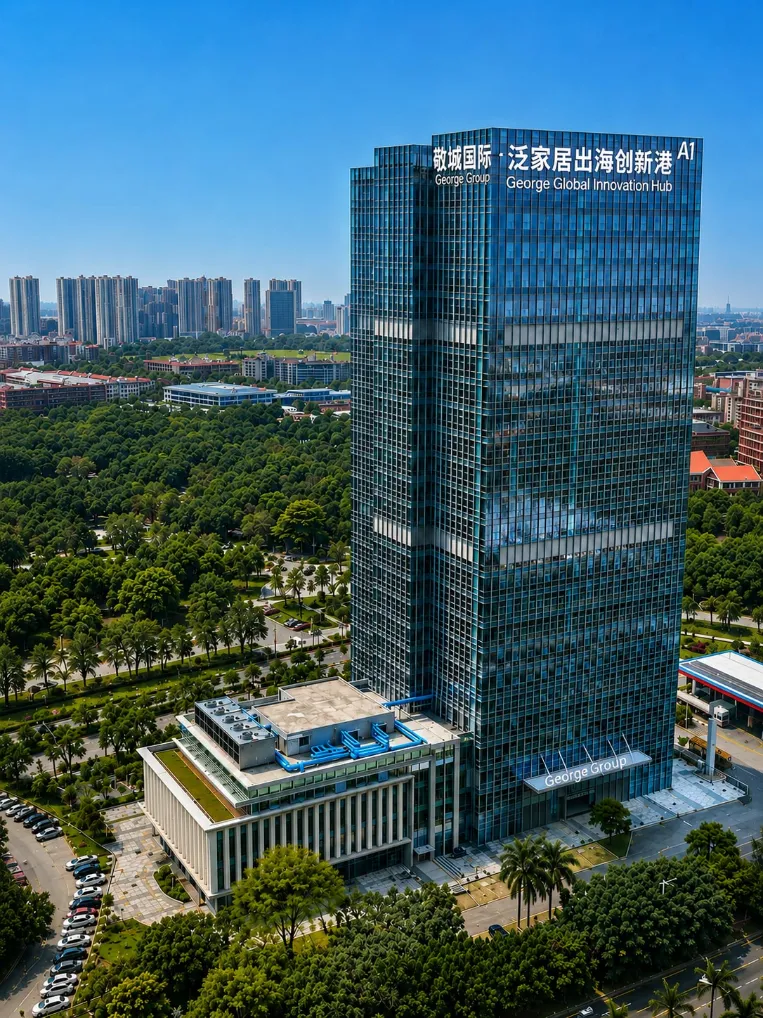
Overseas buyers can work with George Group through an on-site visit or a remote project process.
Option 1: On-Site Selection in Foshan
An on-site visit allows buyers to inspect materials, compare finishes, operate hardware, and discuss quantities and consolidation requirements with the project team. The team can review the selected scope and prepare an itemized quotation; custom items that require additional technical confirmation should be identified before final approval.
Option 2: Remote Project Coordination
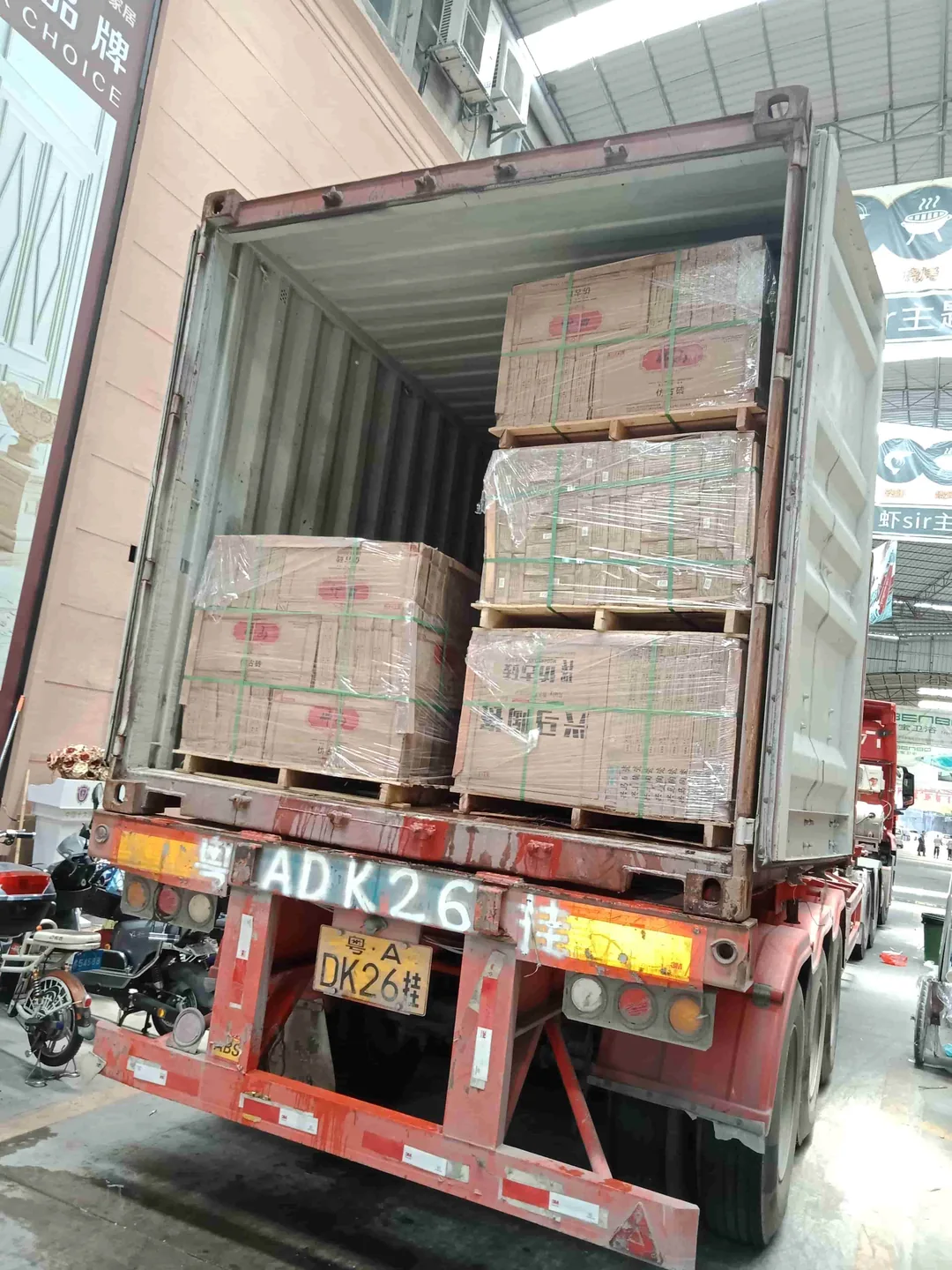
For remote projects, a dedicated project team coordinates selection by video, confirms drawings and samples, reports milestone QC with photos and video, and records container consolidation and loading. The applicable inspection points, reporting requirements, and delivery responsibilities should be included in the agreed order scope.

For projects that begin with architectural drawings rather than a product list, our design service can help develop an itemized material package. The design and supply scope should be confirmed before order approval.
Choose the Right Sourcing Model for Your Project
The appropriate model depends on the product list, required independence, supplier coverage, technical complexity, and the buyer’s own coordination capacity.
| Procurement situation | Model to evaluate | Reason and control point |
|---|---|---|
| Mixed consumer goods or unrelated products from multiple factories | Independent sourcing agent | A broad supplier network and cross-category coordination are usually central to the assignment |
| Building materials must be selected across the open market, and independent factory comparison is required | Agent with relevant building-materials experience | The agent can compare unrelated suppliers; category knowledge and compensation disclosure remain essential |
| You want to visit markets and factories and manage supplier selection yourself | DIY sourcing trip | Direct control can be useful, but technical verification and document control remain your responsibility; our Canton Fair guide and Foshan market guide provide planning context |
| Required categories fall within one supplier’s confirmed scope, and you want direct supply with coordinated QC and consolidation | One-stop building materials supplier | A single supply scope can reduce duplicate coordination; factory verification and approval requirements still apply |
| A single-category or repeat order with established specifications | Direct factory or category supplier | Compare production capability, pricing, documentation, replenishment, and after-sales requirements for the specific product |
| Additional independent assurance is required for any of these models | Third-party inspection | Define inspection scope and acceptance criteria independently of the selling or coordination arrangement |
For projects within George Group’s nine categories, you can submit a material list with the project type, quantities, destination country, and available drawings. The first review should establish whether the list fits the supply scope and which items require further technical or commercial clarification.
Frequently Asked Questions
How much does a China sourcing agent charge?
Common structures include a commission on order value, a fixed project or service fee, and a product-price markup. Indicative commission quotations are often 5–10%, but scope and calculation methods vary. Obtain the full fee structure, included deliverables, additional charges, and any factory-side compensation in writing.
How can I verify a sourcing agent in China?
Verify the legal and payment entities, relevant category experience, project references, factory access, compensation disclosure, document-control process, and independent inspection rights. A credible agent should be able to provide verifiable answers and define the work in a written agreement.
What is the difference between a sourcing agent and a trading company?
A sourcing agent provides supplier-selection and coordination services under a service arrangement. A trading company normally sells products to the buyer and becomes the supplier in the transaction. Some businesses combine these roles, so the contract should identify the selling party, service responsibilities, payment flow, and commercial relationship with the factory.
Is George Group a sourcing agent?
No. George Group is a one-stop building materials supplier covering nine product categories through its manufacturing and partner-factory network. It provides supply coordination, agreed milestone QC, consolidation, and order follow-up within that supply scope rather than a general cross-category sourcing-agency service.
If I buy from a one-stop supplier, do I still need an agent?
It depends on the remaining scope. An agent may still be useful for products outside the supplier’s coverage or for independent open-market supplier selection. You can also appoint a third-party inspector for additional assurance. The decision should be based on unmet responsibilities, not on duplicating an existing coordination layer.
Sources and Editorial Notes
- Commission ranges and fee models are indicative industry observations as of October 2026, not market tariffs or quotations. Actual fees and deliverables vary by agent, product scope, and project requirements and must be confirmed in writing.
- Factory-side compensation is discussed as a potential conflict to verify, not as an accusation against all sourcing agents or any named company. No sourcing-agent rankings or unsupported company claims are included.
- Company capabilities cited—founded in Foshan in 2006, 30,000 m² showroom, nine product categories, no fixed MOQ with LCL options, milestone QC records, and consolidated container loading—are company-provided facts confirmed in the existing evidence ledger.
- Images show George Group’s premises and operations in Foshan. The video describes the company’s stated service process; neither is presented as independent verification of a particular project outcome.
- This guide is procurement education, not a price commitment or service guarantee. Product scope, inspection, delivery, documentation, and other commercial responsibilities are defined by the applicable quotation and contract.