

Windows and Doors Sourcing Guide
Last reviewed: August 2026
Windows and doors are among the building materials where buying from China can still save real money in 2026 — but only if you compare the right numbers. A factory quote in dollars per square meter and a US contractor quote in dollars per window installed are not the same thing, and the gap between them is filled with freight, tariffs, and fees that changed several times in 2025 and 2026.
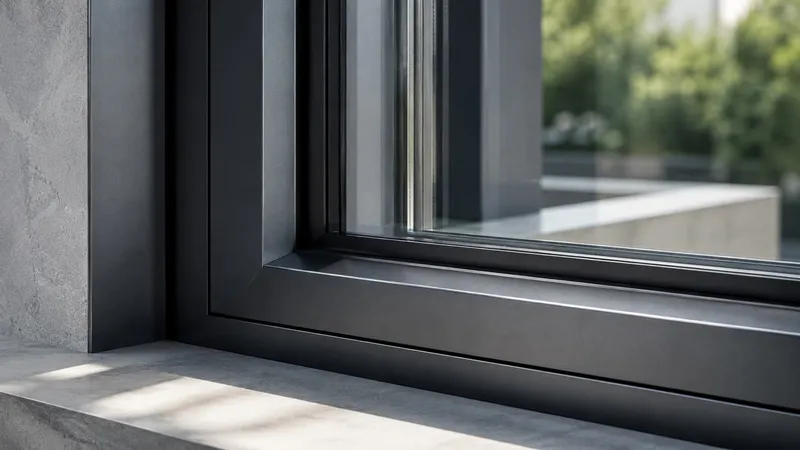
This guide breaks down what windows and doors from China actually cost: current factory listing ranges, the US price benchmarks worth comparing against, the full 2026 duty stack by product type, and one worked landed-cost example with every line item shown. Product context first: aluminum window systems and door collections show the configurations this pricing applies to.
Quick answer: Mainstream aluminum windows from China list at roughly $25–150 per m² and uPVC windows at $29–179 per m² (marketplace listing samples, August 2026 — not transaction prices). After ocean freight, the 2026 US duty stack (about 41–43% for uPVC and wood products, roughly 56–81% for aluminum), customs fees, and inland delivery, a container-scale order typically lands at 2–3× the factory price per square meter. Even so, landed cost per standard window often comes in below the $450–1,200 per window US installed benchmark — if the order is large enough to fill a container and the specs are quoted on the same sheet.
This works for: importers, contractors, developers, and homeowners ordering whole-house or multi-unit packages who can plan 8–12 weeks ahead. This does not work for: replacing one broken window, urgent timelines, or buyers without someone to receive a container. Keep reading for the exact math, the duty table, and a checklist for comparing two quotes fairly.
First, Define What “Cost” Means: The Landed-Cost Formula
Most confusion about China window and door pricing comes from comparing numbers at different points in the supply chain. A factory quote is usually EXW (ex-works) or FOB (loaded on the ship). A US quote is installed in your wall. Everything between those two points is your cost, not the factory’s:
Landed project cost = factory price (EXW/FOB) + export packing + ocean freight + cargo insurance + import duties + customs fees (MPF, HMF) + brokerage and bond + port and drayage + inland delivery + local installation + a rework and contingency allowance.
If a line item is unknown, mark it unknown — do not assume zero. A “50% cheaper” claim that silently drops duties and brokerage is how budgets blow up at the port.
The US Benchmark: What Windows and Doors Cost Bought Domestically
Before looking at China pricing, fix the reference frame. These are US domestic prices from cost guides with published methodologies — homeowner-reported surveys and unit-cost databases, not manufacturer marketing. All figures are per unit, installed, national scope, with the source’s data period noted.
| Product | US price range (installed) | Source and data period |
|---|---|---|
| Standard replacement window (vinyl spec) | $632–967 per window | Homewyse unit-cost data, May 2026 |
| Window replacement, all common types | $450–1,200 typical; $800 average | Fixr window replacement cost guide, updated January 2026 |
| Window replacement, all types | $450–1,500 per window; $900 national average | HomeGuide member-reported project costs, 2026 |
| Replacement window (homeowner survey) | $517 average per installed window | This Old House 2026 survey, n=1,000 US homeowners |
| Windows by frame material (installed) | Aluminum $175–1,000 · vinyl $200–1,500 · fiberglass $400–2,000 · wood $800–3,800 | HomeGuide, 2026 |
| Triple-pane upgrade | +15% average vs double-pane in survey data ($529 → $609); $1,000–4,000 per window at the premium end | This Old House 2026 survey; Fixr, January 2026 |
| Fiberglass entry door | $957–1,458 installed; Fixr national average $1,353 | Homewyse, May 2026; Fixr, January 2025 |
| Sliding patio door (72″×80″, aluminum) | $2,000–4,000 installed; $2,756 average | Fixr sliding patio door cost guide |
| French door | $1,712–2,617 installed | Homewyse, May 2026 |
| Interior door (hollow-core, prehung) | $444–675 installed | Homewyse, May 2026 |
Four US sources converge on roughly $500–1,200 per installed window for a standard replacement. Keep two caveats in mind: “installed” includes $150–300 of labor per window, and contractor project pricing for full-frame, higher-spec units (the Remodeling Cost vs Value 2025 report shows $2,207–2,678 per window for a 10-window job) is a different scope — do not mix the two in one comparison.
What a Standard Replacement Window Costs Installed in the US
US$ per window, installed · US national · sources dated 2025–2026
Scale: $0–1,600 per window. Sources: This Old House 2026 homeowner survey; Homewyse (May 2026); Fixr window replacement guide (updated January 2026); HomeGuide (2026). Contractor full-frame project pricing runs higher — see text.
China Factory Prices: What the Listings Actually Show
There is no single “China price.” What buyers see publicly are advertised listing prices on Made-in-China and Alibaba, which factories use as marketing anchors — often lowballed, volume-tiered, and ambiguous about whether the number is per square meter or per piece. Treat them as a range check, not a quote.
Ranges below are observed listing samples from August 2026, not transaction prices and not George Group pricing. A real quote depends on the specification lines in the next section.
| Product type | Observed listing range | Unit and notes |
|---|---|---|
| Aluminum windows, mainstream | $25–150 | per m²; basic sliding/casement profiles at the low end |
| Aluminum windows, thermal-break | up to $265–315 | per m²; “broken bridge” insulated-profile storefronts |
| uPVC windows | $29–179 | per m²; heavily volume-tiered (one Foshan listing steps $59 → $39 → $29 by m² tier) |
| Aluminum sliding doors | $53–150 | per m²; MOQs of 100–350 m² on the lowest tiers |
| Aluminum bi-fold doors | $50–300 | per m²; thermal-break systems at the top |
| Steel entry / security doors | $32–400 per piece; $60–280 per m² | mixed per-piece and per-m² listings — check which before comparing |
Observed China Factory Listing Price Ranges
US$ per m² · Made-in-China / Alibaba advertised listings · observed August 2026
Scale: $0–320 per m². Advertised listing samples, not transaction prices; low tiers usually carry MOQs of 100–500 m². Steel doors also appear as $32–400 per piece listings — check the unit before comparing.
How to read a marketplace listing without fooling yourself: check whether the price is per m² or per piece, whether it is EXW or FOB, what MOQ tier the headline price requires, and whether the pictured configuration (thermal break, brand hardware, Low-E glass) is actually the one being priced. When the listing is silent, assume the cheapest interpretation is the real one. Or skip the guesswork — send us your window schedule and get a real line-itemed number instead of a listing anchor:
Why $/m² and $/Window Can’t Be Compared Directly
China quotes per square meter; the US market prices per window installed. Converting is simple, and skipping it is the most common spreadsheet error:
- Convert the factory price to per-unit: a 1200 × 1500 mm casement is 1.8 m². At a $50/m² listing price, that window is about $90 at the factory gate.
- Add the logistics stack: freight, duties, and fees per the worked example below. That $90 window typically lands at $140–170 before installation.
- Add local installation: $150–300 per window at US labor rates puts the installed-equivalent cost around $290–470.
- Compare like with like: that figure — not $90 — is what goes up against the $500–1,200 US installed benchmark.
The comparison also has to match on specification. A $50/m² window is not a thermal-break, Low-E, argon-filled, NFRC-rated unit; a US window at the top of the range usually is. The next section shows which specification lines move the factory price.
What’s Inside a Factory Quote: The Lines That Move the Price
A factory quotation for windows and doors is built from a handful of specification decisions. Each one is a line you can move up or down — which is why two “aluminum casement window” quotes can differ by 3× and both be honest.
| Quote line | What to specify | Why it moves the price |
|---|---|---|
| Profile system | Series number, wall thickness (e.g., 1.4 vs 2.0 mm), thermal break or not | Aluminum is bought by weight; thicker walls and thermal-break strips add material and processing cost |
| Glass build-up | Single/double/triple glazing, Low-E coating, argon fill, tempered or laminated panes | Each upgrade adds glass cost and often forces a heavier profile; laminated and triple glazing are the big steps |
| Hardware tier | Domestic Chinese hardware vs imported European brands (handles, hinges, multi-point locks, rollers) | Hardware is the most under-specified line; the brand set can shift a window’s price noticeably and decides how it feels in year five |
| Surface finish | Standard powder coat, anodized, PVDF/fluorocarbon, wood-grain transfer | PVDF and wood-grain finishes cost more and weather better in harsh sun or coastal air |
| Add-ons | Insect screens, grilles, integrated blinds, automation | Quoted separately; easy to forget when comparing two quotes line by line |
| Certification and testing | NFRC ratings, AAMA/ASTM test reports, impact certification where required | Testing and engineering for a specific US rating adds cost and lead time — specify it upfront, not after production |
| Packing and loading | Export crating, container loading plan | Glass-heavy cargo needs real crating; cheap packing shows up later as breakage, not savings |
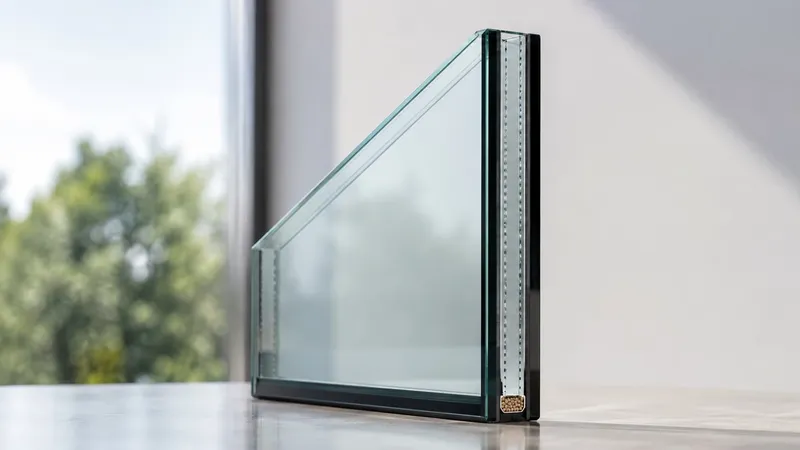
The practical move: build one specification sheet with these lines filled in — our door specification guide includes a copyable door schedule for the door lines — send the identical sheet to every supplier, and refuse to compare totals until the lines match. A lower total on a weaker sheet is not a lower price.
Shipping and Duties in 2026: The Part That Changed
Anything written before 2026 about “3–8% US duty on windows from China” is out of date. The tariff stack changed repeatedly in 2025–2026 — Section 232 metals duties were raised to 50%, the de minimis exemption for China was suspended in August 2025, IEEPA tariffs were struck down by the Supreme Court in February 2026, and a new Section 301 forced-labor duty took effect July 24, 2026. Treat every rate below as as of August 2026, and confirm with a licensed customs broker before you order — a coalition of 25 states sued over the newest layer in August 2026, and rates may move again.
Base (MFN) duty rates below are from the USITC Harmonized Tariff Schedule, checked August 26, 2026. The stacked column adds the Section 301 China duties and, for metals, Section 232. Duties are calculated on the customs value of the goods.
| Product (HTS code) | MFN base duty | Estimated effective duty from China, Aug 2026 |
|---|---|---|
| Aluminum windows and doors (7610.10) | 5.7% | ~56–81% (5.7% + 25% Section 301 + Section 232 aluminum at 25–50%; published interpretations of the §232 tier conflict) |
| uPVC windows and doors (3925.20) | 5.3% | ~42.8% (5.3% + 25% Section 301 + 12.5% forced-labor layer) |
| Wood windows (4418.11/19) | 3.2% | ~40.7% (3.2% + 25% + 12.5%) |
| Wood doors (4418.21/29) | 4.8% | ~42.3% (4.8% + 25% + 12.5%) |
| Steel doors and windows (7308.30) | Free (0%) | ~75% (0% + 25% Section 301 + 50% Section 232 steel — verify annex placement with your broker) |
On top of duties, budget the fixed customs costs: the Merchandise Processing Fee at 0.3464% of cargo value (minimum $33.58, maximum $651.50 per entry in fiscal 2026), the Harbor Maintenance Fee at 0.125% for ocean cargo, roughly $100–250 per entry for customs brokerage, $50–85 for the ISF filing, and a customs bond (about $75–150 single-entry).
Ocean freight is the other volatile line. For a 40-foot container from South China in 2026, the Freightos Baltic Index showed $2,418 to the US West Coast and $3,859 to the East Coast on August 26, 2026, while the Drewry World Container Index showed $5,739 Shanghai–Los Angeles and $7,578 Shanghai–New York on July 30 — the two indices use different methodologies and diverged sharply in August, so quote a range, not an average. Across 2026, plan roughly $2,100–5,700 per 40ft to the West Coast and $3,000–7,600 to the East Coast depending on season; manufacturer guides put a 20-foot container at $2,500–4,500. A 20ft container typically holds about 200–300 m² of windows and doors.
Worked Example: Landed Cost of a uPVC Window Package
An illustrative example with every assumption visible — this is not a quote, and your numbers will differ. Assume 200 m² of uPVC casement windows (about 110 units of 1200 × 1500 mm), FOB South China, one 20ft container to a US East Coast port, duty stack at the ~42.8% uPVC rate above.
| Line item | Amount | Basis |
|---|---|---|
| Factory price, FOB | $8,000 | 200 m² × $40/m² — within the observed uPVC listing range |
| Ocean freight, 20ft | $3,500 | Midpoint of the $2,500–4,500 manufacturer-guide range |
| Cargo insurance | $200 | Typical ballpark for an $8,000 shipment |
| Import duty (~42.8%) | $3,424 | Applied to $8,000 customs value; see duty table and broker caveat |
| MPF + HMF | $44 | 0.3464% is below the $33.58 minimum, so minimum applies; HMF 0.125% = $10 |
| Brokerage, ISF, bond | $315 | $150 broker + $65 ISF + $100 single-entry bond |
| Port fees and drayage | $1,000 | Midpoint of a $500–1,500 range |
| Inland delivery | $1,500 | Midpoint of a $1,000–3,000 range, distance-dependent |
| Contingency (~5%) | $900 | Damage, exam fees, storage, rework allowance |
| Landed total (before installation) | ≈ $18,900 | ≈ $94/m² landed, ≈ $172 per window |
Where the Money Goes: Landed Cost of a 200 m² uPVC Window Package
US$ · FOB South China → US East Coast port, then inland · illustrative example, duty stack as of August 2026
Total ≈ $18,900 before installation. Assumptions and sources per line item in the table above; the duty line uses the ~42.8% uPVC stack as of August 2026 — confirm your HTS codes with a licensed customs broker.
Add US installation at $150–300 per window and the installed-equivalent cost lands around $322–472 per window — below the $500–1,200 domestic installed benchmark for a standard replacement, before counting the value of getting custom sizes and finishes at no premium. The duty line alone is about 18% of the landed total in this example; two years ago it would have been a rounding error, which is why pre-2026 savings claims (“60–75% cheaper”) no longer survive contact with a calculator.
Per-Window Comparison, Same Standard Unit (~1200 × 1500 mm)
US$ per window · China route = landed cost + US installation labor · US figures installed · 2026
Scale: $0–1,300 per window. China figure from the worked example above ($172 landed + $150–300 installation). Valid only at container scale and with matched specifications — see the quote-comparison checklist below.
Scale matters. Below container volume, the fixed costs — brokerage, bond, minimum MPF, drayage, LCL freight at $150–300 per m³ — eat the savings. One practical workaround: combine windows and doors with other building materials or furniture in the same container so the fixed costs spread across the whole order.
When Importing Makes Sense — and When It Doesn’t
| Good fit | Poor fit |
|---|---|
| Whole-house or multi-unit packages (new builds, renovations, developments) | Replacing one or two windows — fixed import costs dominate |
| Container-scale orders (≈200–300 m² fills a 20ft) | Small orders shipped LCL, where per-m³ freight and fixed fees erase the gap |
| Custom sizes, large-format sliding/folding doors, specific finishes | Standard stock sizes that a US retailer discounts deeply |
| Timelines with 8–12 weeks of runway | Urgent replacements and weather-driven emergencies |
| Buyers with a broker and someone to receive freight | Buyers without import support or a receiving plan |
| Projects combining windows, doors, cabinets, and other materials in one shipment | Standalone window orders for a single room |
Lead time, honestly stated: production runs 25–45 days for custom windows and doors, ocean transit to North America 20–35 days, and clearance about 3–10 days. Plan for 8–12 weeks from confirmed order to material on site, and add buffer if your products need US-specific testing or certification paperwork.
How to Compare Two Quotes Without Getting Fooled
- Put both quotes on the same specification sheet. Same sizes, same glass build-up, same hardware brand set, same finish, same certification targets. Different sheets mean the totals are not comparable.
- Normalize the units. Convert everything to per-unit and to landed-per-m² so a China quote and a US quote sit in the same two columns.
- Pin the Incoterm. EXW, FOB, CIF, and DDP put the logistics lines on different sides of the table. Know which lines are on your side.
- Price the whole package, not the window. Include freight, duties, MPF/HMF, brokerage, delivery, installation, and a contingency line. Any comparison missing these is a factory-price comparison, not a cost comparison.
- Date the tariff assumption. The 2026 stack has already changed twice this year; have your broker confirm current rates for your exact HTS codes before signing.
- Order samples before volume. A sample set verifies profile quality, glass build-up, and hardware feel before the container is booked.
- Choose the supplier on evidence, not price list. Verified factories, export experience, and references matter more than a $/m² line — our roundup of window and door manufacturers in China covers how to screen candidates.
Common Mistakes That Erase the Savings
- Comparing a China factory price to a US installed price. Add the logistics stack first, then compare.
- Trusting pre-2026 duty figures. Older guides quoting 3–8% US duty predate the 2025–2026 changes; check the date before trusting the math.
- Ignoring the duty difference between materials. Aluminum carries the Section 232 metals layer and uPVC/wood do not, so the cheapest quote can flip once duties are applied.
- Leaving hardware unspecified. “Standard hardware” means whatever the factory has on the shelf; name the brand and model set in the PO.
- Skipping export crating standards. Breakage on glass-heavy cargo is a packing failure, not bad luck.
- Ordering too small. Below container scale, fixed import costs usually make domestic purchasing the better deal.
What George Group Brings to This Kind of Order
George Group is a building materials manufacturer based in Foshan, China — the city where much of the country’s window and door industry is concentrated. Windows and doors are one of its core production lines, alongside kitchen cabinets, wardrobes, bathroom fixtures, and other whole-house categories. For buyers running the math in this guide, four things matter in practice:
- Quotes built on your specification sheet. Every quote is line-itemed against the same lines in the table above — profile series, glass build-up, hardware brand set, finish, packing — so you can put it next to a local bid and compare the same thing.
- One container, many categories. Windows and doors can be consolidated with cabinets and other materials from the same group in a single shipment — which is exactly the fix for the fixed-cost problem that makes small import orders uneconomic.
- Custom as standard. Project sizes, large-format sliding and folding doors, and finishes from powder coat to PVDF and wood grain are priced as production items, not premium add-ons.
- Export execution. Export crating for glass-heavy cargo, container loading plans, and the certification and test paperwork your customs broker and local inspectors will ask for — plus design support when you are working from floor plans rather than a finished window schedule.
Production lead time runs 25–45 days depending on specification, and sample orders ahead of volume production are standard practice — most small samples are usually free; you only need to pay for shipping.
Methodology and Sources
US benchmark prices come from cost guides with published methodologies: Homewyse unit-cost data (May 2026), Fixr cost guides (updated January 2025 – January 2026 by page), HomeGuide member-reported project costs (2026), and the This Old House 2026 homeowner survey (n=1,000). Base duty rates were checked against the USITC Harmonized Tariff Schedule on August 26, 2026; the Section 301/232 stack reflects the tariff status as of August 2026 and is under active litigation. Ocean freight figures are from the Freightos Baltic Index (August 26, 2026) and the Drewry World Container Index (July 30, 2026). China-side figures are observed marketplace listing samples from Made-in-China and Alibaba (August 2026) — advertised listing prices, not transaction prices. No George Group internal pricing is used in this article; all numbers are public benchmarks and listing samples. Lead times are manufacturer-published estimates.
Source list (accessed August 26, 2026)
- US window/door benchmarks: Homewyse replacement window cost (May 2026 data), Fixr window replacement cost (updated January 2026), HomeGuide window replacement cost (2026), This Old House 2026 window cost survey (n=1,000), Homewyse exterior door cost, Fixr sliding patio door cost, Homewyse French door cost, JLC/Remodeling 2025 Cost vs Value Report.
- US import duties: USITC Harmonized Tariff Schedule (rates checked live August 26, 2026; HTS 7610.10, 3925.20, 4418.x, 7008.00, 7308.30); Section 232/301 program status cross-checked against law-firm tariff alerts published April–July 2026. Effective stacks are estimates — confirm with a licensed customs broker.
- Ocean freight: Freightos Baltic Index (August 26, 2026) and Drewry World Container Index (July 30, 2026).
- China listing samples: advertised price listings observed on Made-in-China.com and Alibaba.com, August 2026. Listing prices are marketing anchors, not transaction prices.
Frequently Asked Questions
Do Chinese factory prices include shipping and duties?
Almost never. Marketplace and factory quotes are typically EXW or FOB — the goods loaded at the origin. Ocean freight, insurance, duties, customs fees, and inland delivery are on the buyer’s side unless the quote explicitly says CIF or DDP.
Is there a minimum order?
It varies by product and factory rather than one fixed number. Trial orders around 10 m² are common for a first project, while container economics start making sense near the 200–300 m² that fills a 20ft container. Windows and doors can often be combined with other building materials or furniture in the same container to reach that scale.
Are samples available before a volume order?
Most small samples are usually free; you only need to pay for shipping. Full-size window or door samples are typically charged with freight — treat that as cheap insurance before committing a container.
How long does the whole process take?
Production takes 25–45 days for custom windows and doors, ocean transit to North America 20–35 days, and customs clearance about 3–10 days. Plan for 8–12 weeks from confirmed order to material on site.
Will the 2026 tariff rates change again?
Possibly. The newest duty layer took effect in July 2026 and is being challenged in court by 25 US states. Confirm current rates for your HTS codes with a licensed customs broker before signing an order, and date every cost spreadsheet you keep.
Get a Line-Itemed Factory Quote for Your Project
The fastest way to know whether importing works for your project is to put a real factory quote next to your local bids. Send George Group your window schedule or floor plan — you will get back a line-itemed quotation built on the same specification lines this guide uses: profile system, glass build-up, hardware tier, finish, packing, and lead time. If your project also needs cabinets, wardrobes, or other materials, they can be quoted and consolidated into the same shipment to spread the freight and customs fixed costs.
- Browse the window systems and door collections for configurations and finishes
- See how whole-house customization from China consolidates a full project into one shipment
- Contact the team with your drawings, or start with a sample order before committing a container